-
Neue Deutsche Todeskunst
October 12 to November 28, 2026
Dokumentationszentrum Thüringen (DZT)
With Fabian Reetz, Juro Carl Anton Reinhardt, Valerie Zichy, Oswald Henke, Caroline Schlegel, Erik Niedling
Room 1
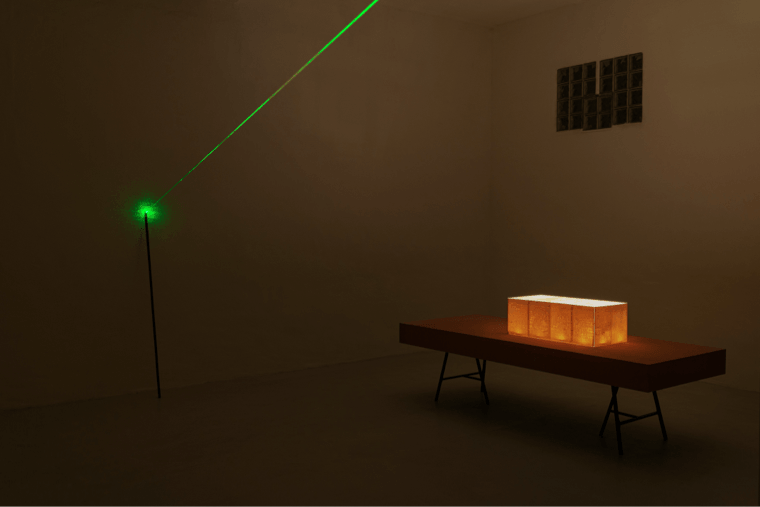
Exhibition view, Neue Deutsche Todeskunst, DZT, 2026 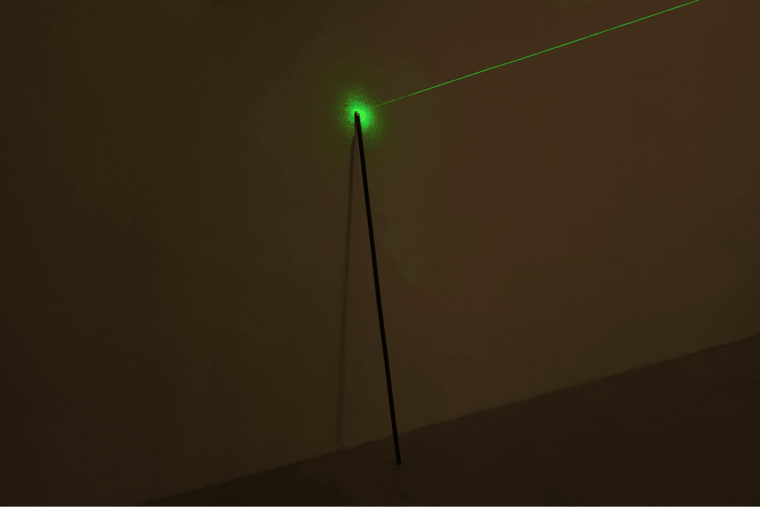
Erik Niedling
ST37, 2012
Steel, goats milk, laser
197.3 × 2.5 cm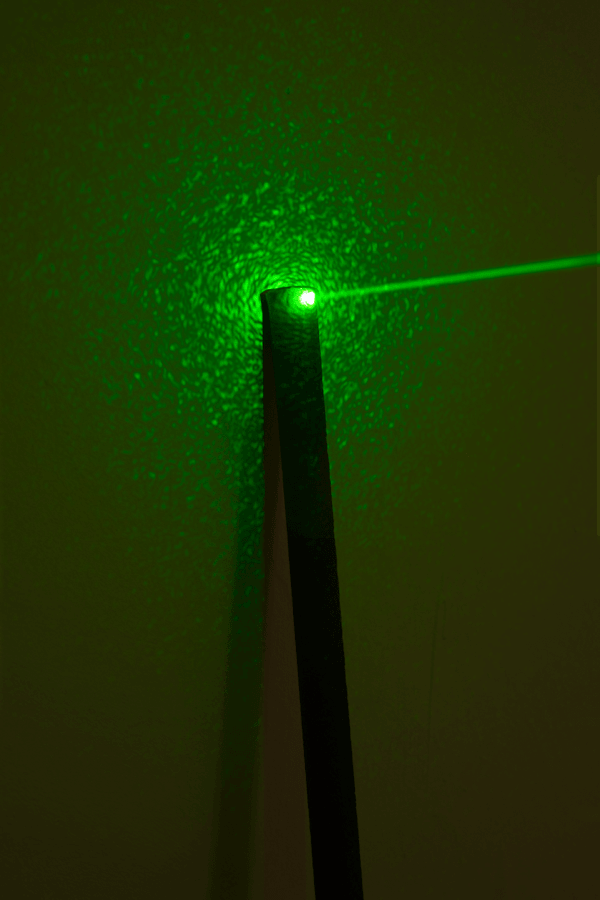
Erik Niedling
ST37, 2012 (Detail)
Steel, goats milk, laser
197.3 × 2.5 cm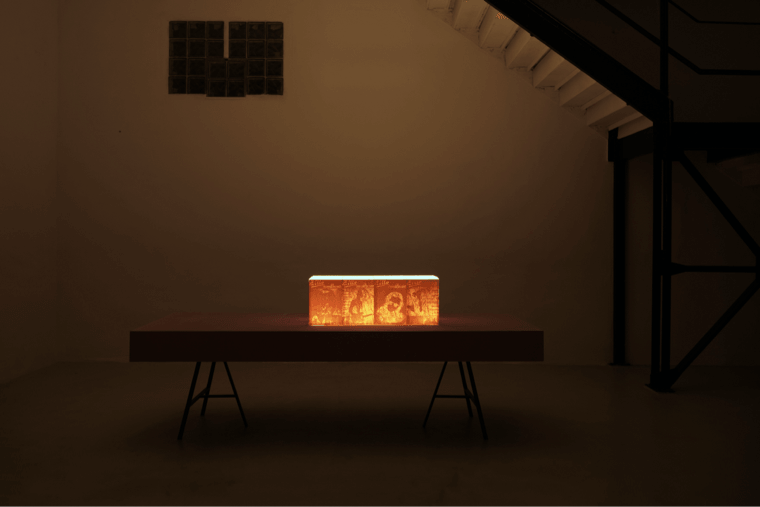
Fabian Reetz in collaboration with Juro Carl Anton Reinhardt
In Riefenstahl-Gewittern, 2026
Laser engraved paper, candles
84 × 42 × 29.5 cm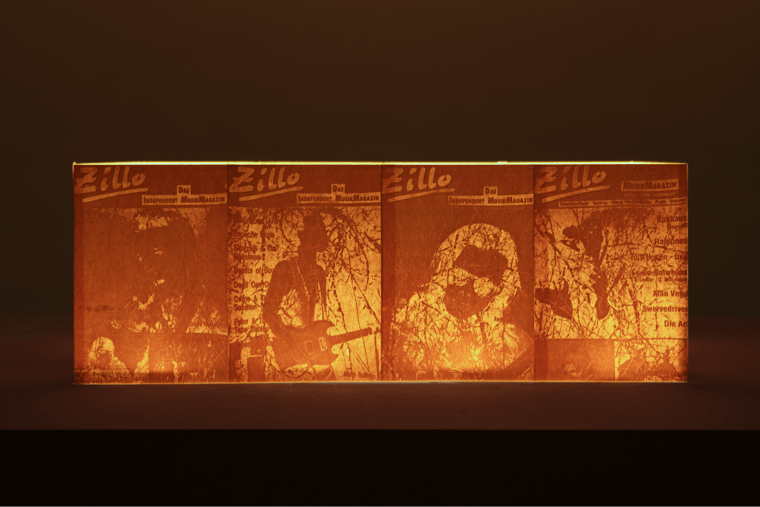
Fabian Reetz in collaboration with Juro Carl Anton Reinhardt
In Riefenstahl-Gewittern, 2026 (Detail)
Laser engraved paper, candles
84 × 42 × 29.5 cm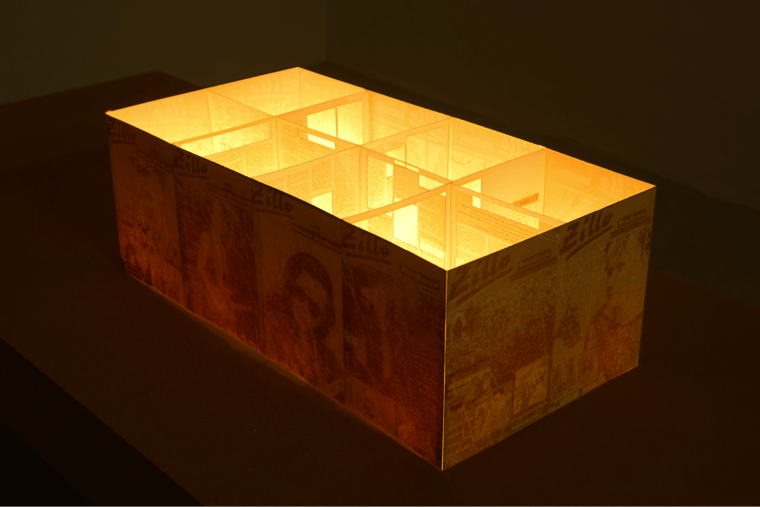
Fabian Reetz in collaboration with Juro Carl Anton Reinhardt
In Riefenstahl-Gewittern, 2026 (Detail)
Laser engraved paper, candles
84 × 42 × 29.5 cm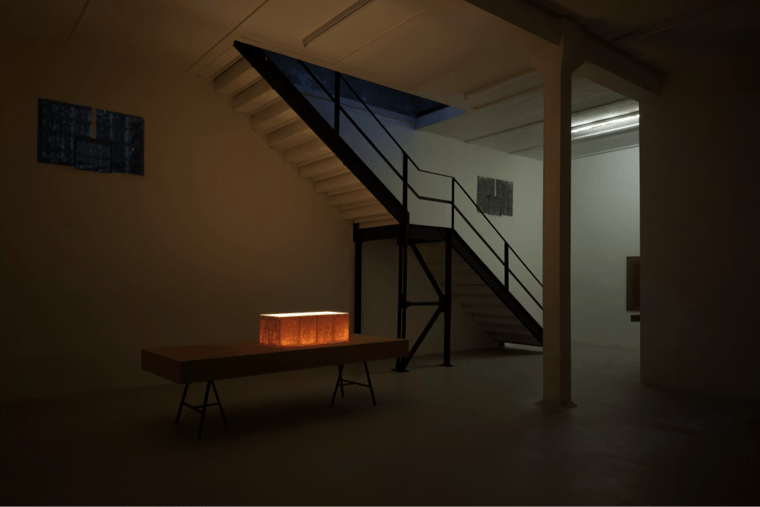
Exhibition view, Neue Deutsche Todeskunst, DZT, 2026 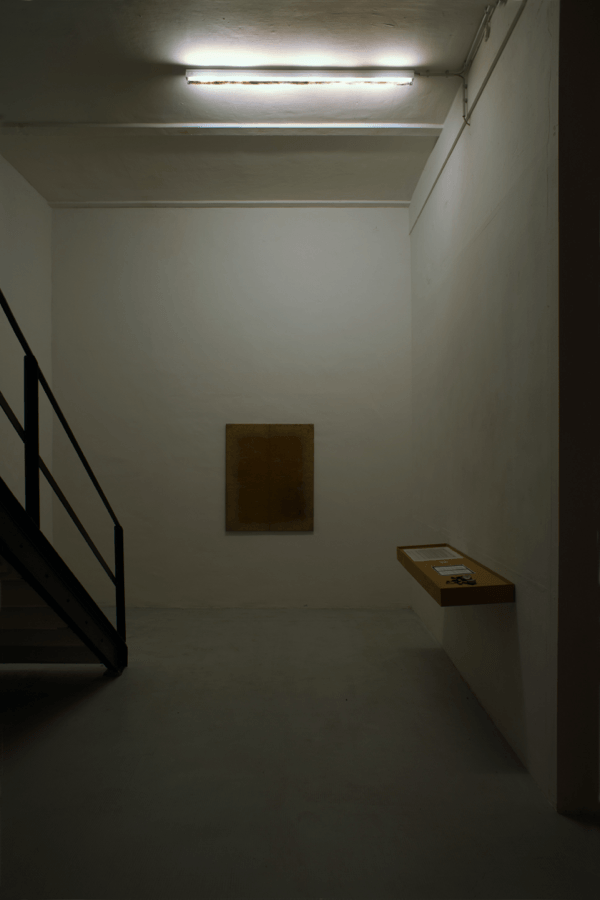
Exhibition view, Neue Deutsche Todeskunst, DZT, 2026 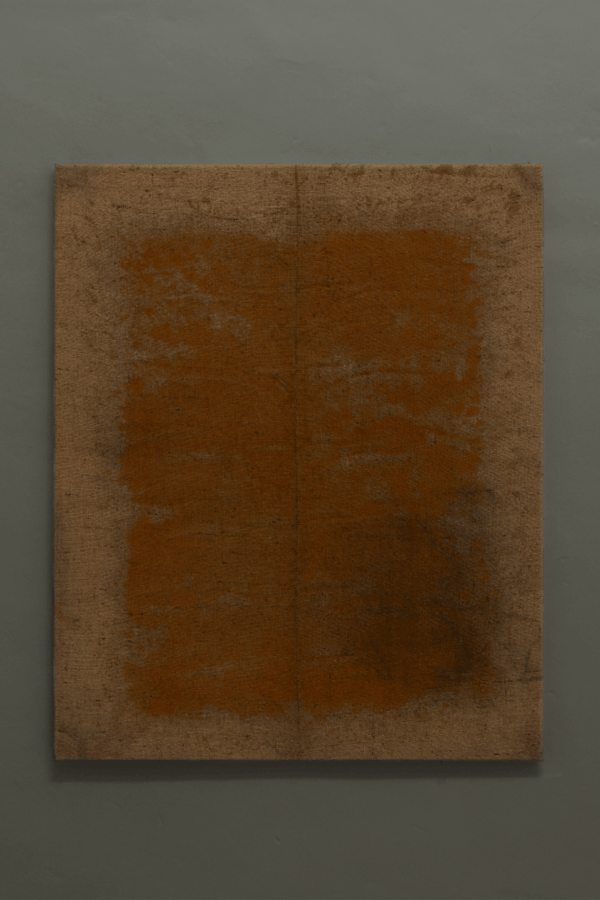
Erik Niedling
Rust Painting, 2026
Rust on burlap
110 × 90 cm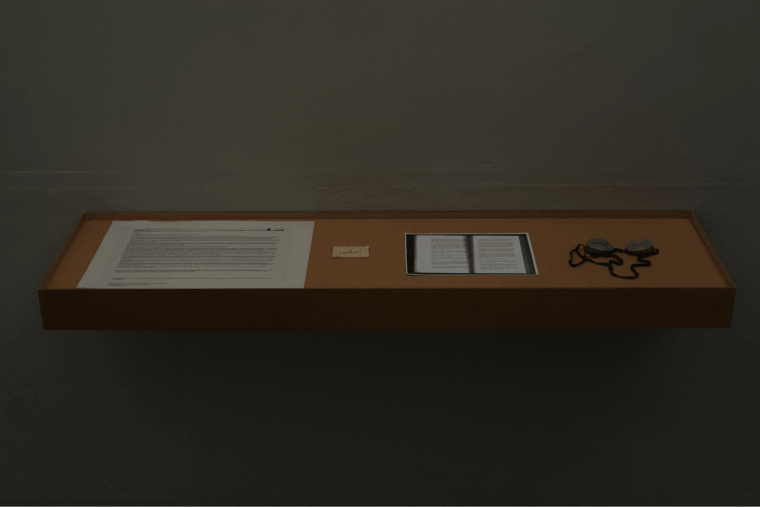
Fabian Reetz in collaboration with Juro Carl Anton Reinhardt
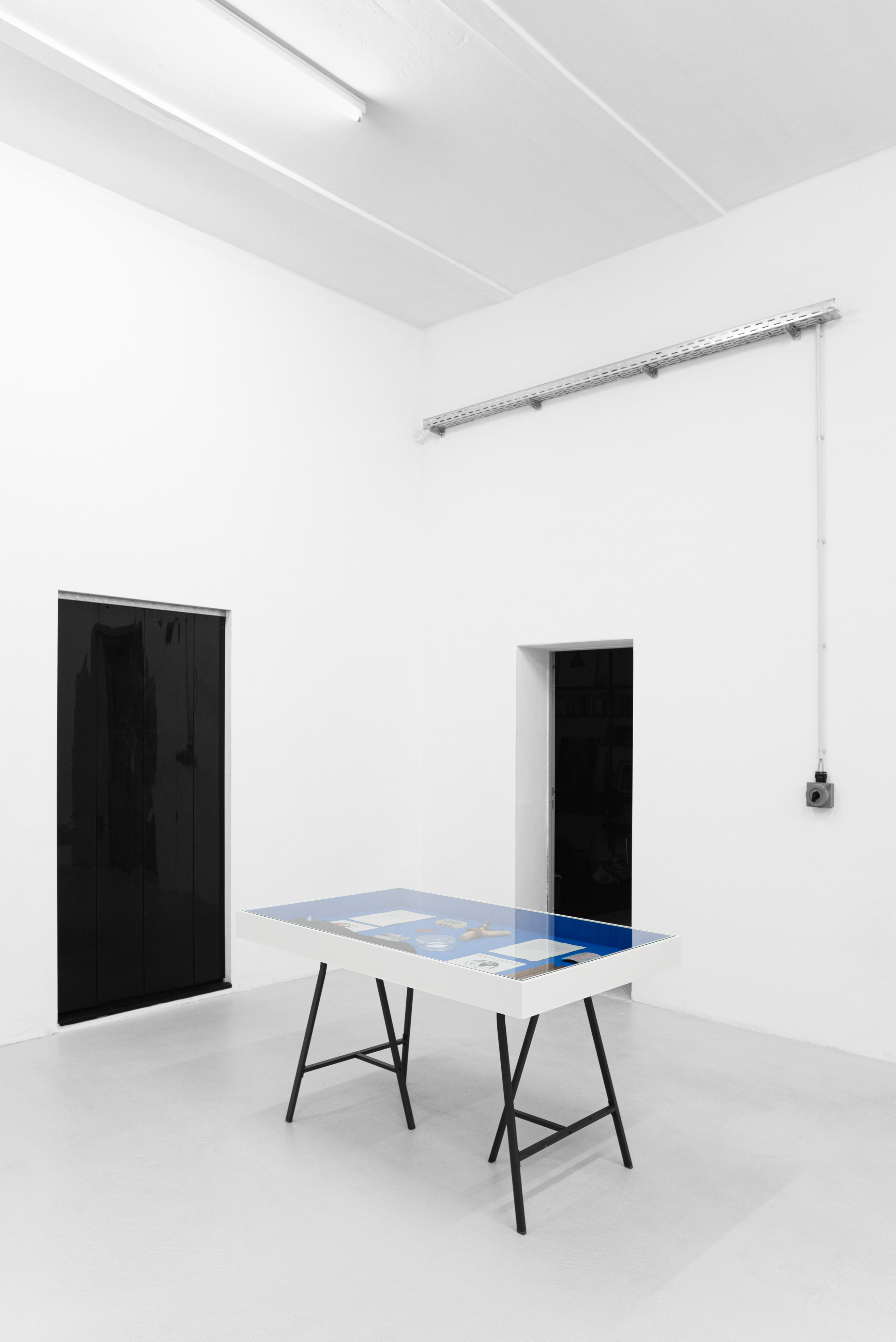
Display Case with texts by Alfred Schobert (Junge Welt, 1995/2006),
Excerpt from Erik Niedling with Ingo Niermann (Burial of the White Man, 2019),
Valerie Zichy (notes, 2026); mountain climber goggles, invitation card DZT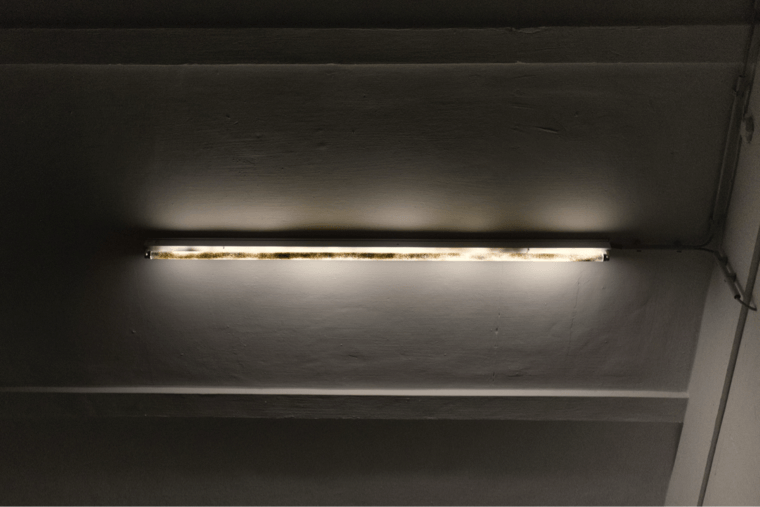
Juro Carl Anton Reinhardt
Sooted neon l, 2026
150 × 3 × 3 cmRoom 2
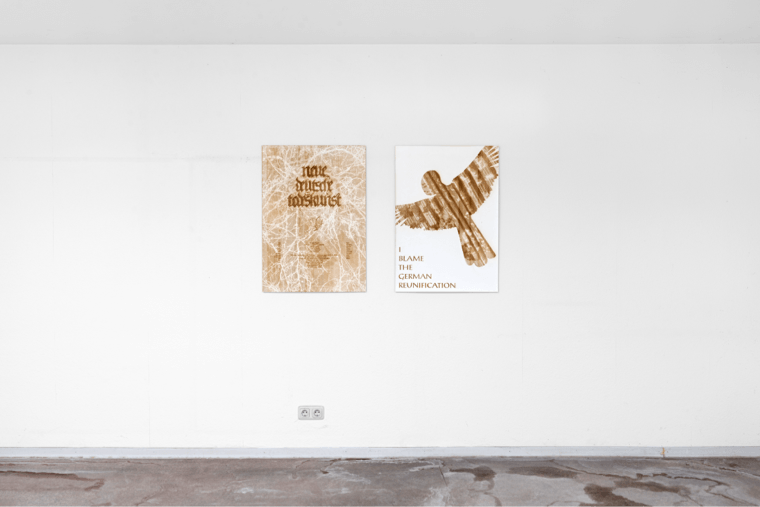
Exhibition view, Neue Deutsche Todeskunst, DZT, 2026 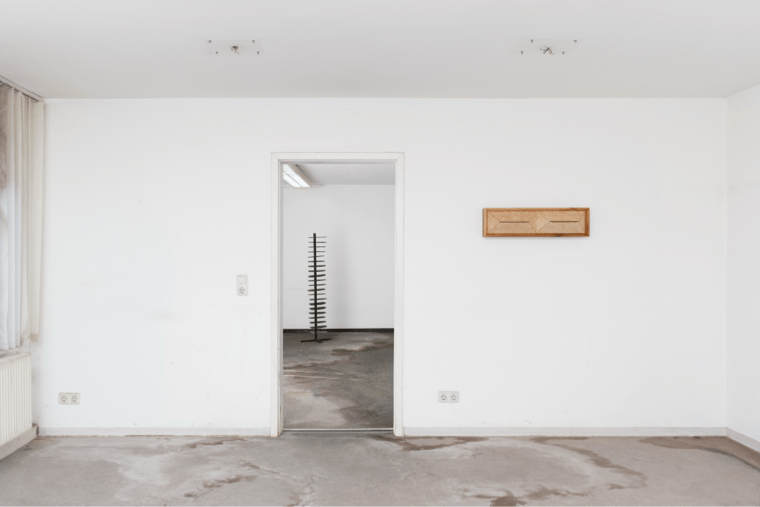
Exhibition view, Neue Deutsche Todeskunst, DZT, 2026 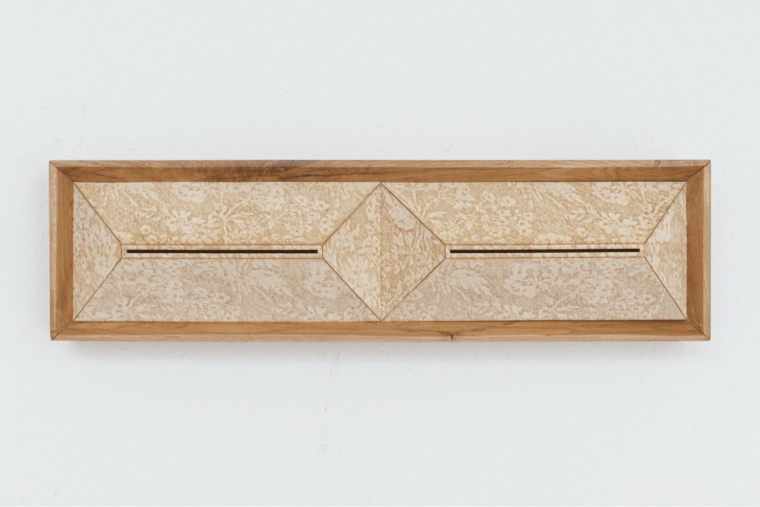
Fabian Reetz in collaboration with Juro Carl Anton Reinhardt
Die Anderen Bands (l,ll,lll,lV,V), 2026
Laser engraved paper, wood
à 73 × 13 × 13 cm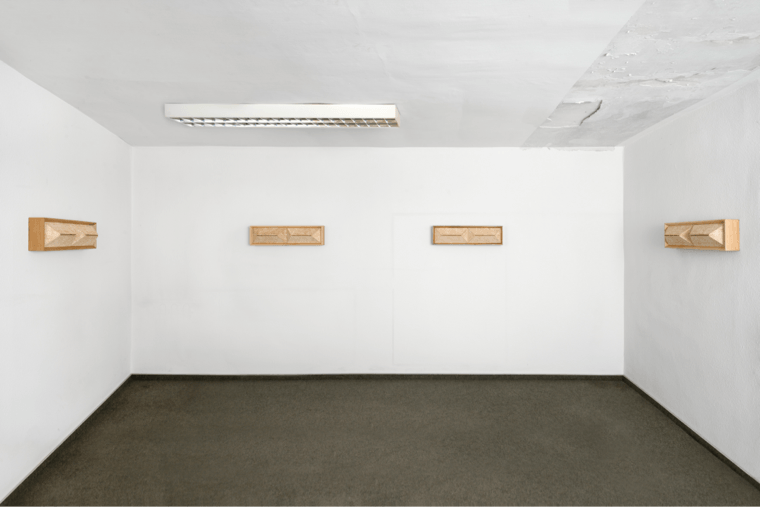
Exhibition view, Neue Deutsche Todeskunst, DZT, 2026 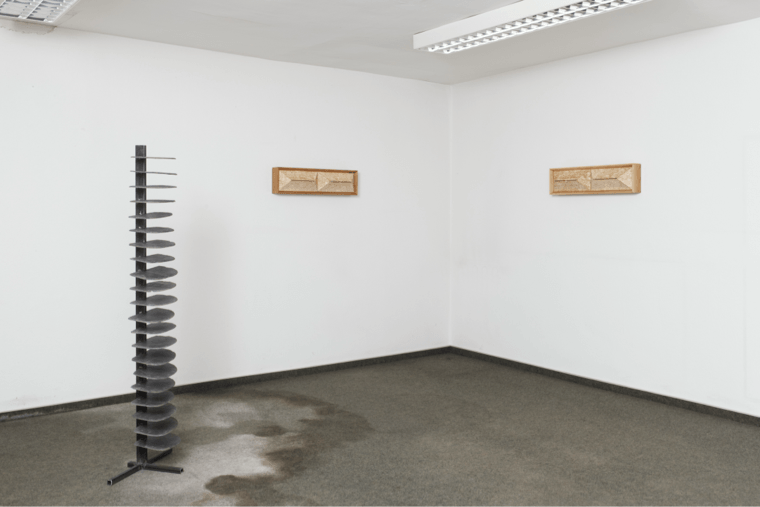
Exhibition view, Neue Deutsche Todeskunst, DZT, 2026 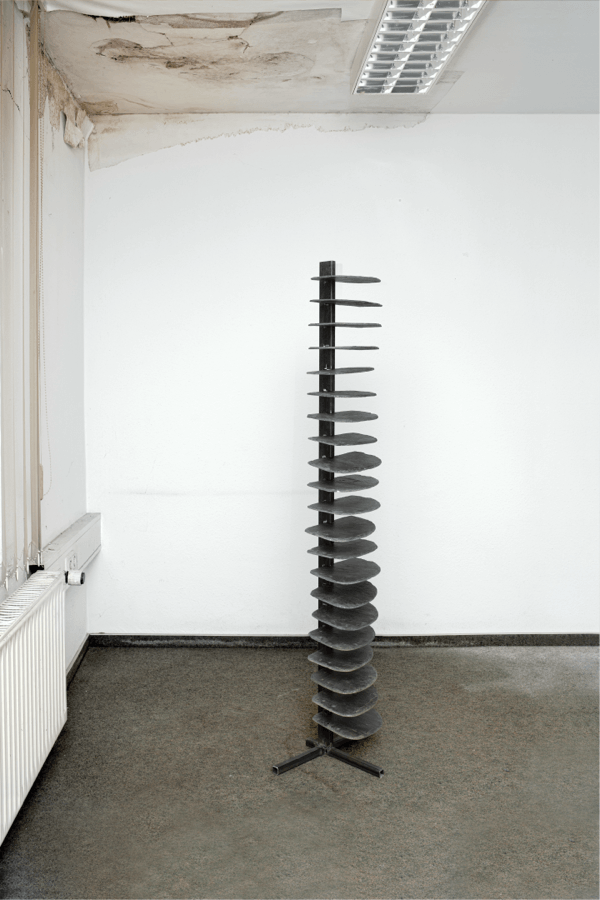
Fabian Reetz
Mystic Sound Tower, 2026
Slate, steel
167 × 40 × 30 cmNeue Deutsche Todeskunst
Drawing from different generational experiences of East Germany, Erik Niedling (*1973), Fabian Reetz (*1997), and Juro Carl Anton Reinhardt (*1998) engage with shared questions concerning memory, subculture, ideology and transformation. Thuringia functions as a condensed space in which political upheavals, aesthetic patterns, and traces of German history have sedimented. What connects the three artists is less an interest in death itself than in the conditions under which social movements and individual values take shape. The title Neue Deutsche Todeskunst refers, on the one hand, to a musical genre that emerged in the early 1990s and, on the other, to an attitude that refuses the prospect of a happy end. That opens up a space for self-determination beyond political promises of redemption, cultural nostalgia, or the demand for biographical coherence. The exhibition is divided into two parts. The ground floor addresses experiences of violence and the social dynamics that have emerged from them since the 1990s. Initiated by Reetz, the exhibition format overlayers temporal epochs such as the founding of the nation-state, the period surrounding German reunification, and the present. The use of light sources follows this approach which resists a linear narrative of progress. Fragmented points of light emerge within the darkened space.
Part of ST37 (Niedling, 2012) is a green laser directed at the upper end of a steel rod leaning against the wall. Compressed at both ends and ritually rubbed with goat’s milk, the rod refers to the night of 24 December 1998, when the artist was caught up in an episode of drug-fuelled excess and violence that began with the use of a laser pointer. The events of that night are documented in a 194-page account compiled in collaboration with the writer Ingo Niermann, based on the participants’ conflicting recollections. Niedling obsessively revisited the disintegration of his circle of friends without attempting a complete reconstruction. Instead, the work opens onto unstable conditions in which cultural codes and personal biographies alike become fractured.
6. Christoph L. is simultaneously attacked by another group of young men. When he attempts to flee, René K. hits him over the head with a full bottle of Cinzano. He suffers a major laceration, puts up a fight, and beats the pursuers in flight. 7. Christoph L. and Erik N. meet again and look at each others’ injuries. Christoph L. exposes his torso and rubs blood from the laceration on it. 8. At a construction site, Christoph L. takes an iron rod and Erik N. tears a slat from a wooden fence. Thus armed, the two intend to return to the Predigerkeller. (Erik Niedling with Ingo Niermann: Burial of the White Man, Sternberg Press, 2019, pp. 118–119)
In Riefenstahl-Gewittern (Reetz, Reinhardt, 2026) is illuminated from within by candles, casting a flickering light into the room. Details from the indie magazine Zillo emerge indistinctly across its laser-engraved paper surfaces. Presented like an architectural model the covers of the magazine form its exterior walls; the interior walls consist of inside pages from an issue. Individual images have been cut out, as have sections of the table of contents. Reetz and Reinhardt focus on the formal elements and graphic design such as page numbers, logos, and the editor’s foreword, which exposes the economic pressures under which the magazine was produced.
Auf einer halben Seite wird eine Doppel-CD nebst Buch zu Ehren der Nazi-Kult-Ikone Leni Riefenstahl beworben. Die hier angekündigten Bands und Projekte lesen sich wie ein Auszug aus dem Who is Who des Szeneteils, der mehr oder minder offen mit faschistischen Images kokettiert und/oder faschistische Ideologieversatzstücke reproduziert. Für Riefenstahl, die „in einem Meer von barbarischen Kitsch das unangenehme Paradox einer faschistische (Film-)Kunst von Rang geschaffen“ hat (Georg Seeßlen), können sie sich alle begeistern. (Auszug aus: Alfred Schobert, Mit Leni Riefenstahl wird Nazi-Kunst populär gemacht. Das Magazin Zillo und seine Verstrickung in die rechte Szene, Junge Welt, 1996, p. 1)
Zillo played a central role in the network of Gothic bands across the German- speaking world during the 1990s. In 1996, the newspaper junge Welt published a text by Alfred Schobert denouncing the entanglement of the indie scene with far-right ideas. Bands such as Strength Through Joy were promoted in its pages. Their double CD Salute to Light included a musical interpretation of the völkisch veneration of light associated with the painter Fidus, alongside recordings from Riefenstahl’s Olympia film. The politicisation of bodies, present both in Riefenstahl’s films and in images of East German athletes in the GDR, persists in the staging of international bands whose portraits appeared on Zillo’s covers and now glow in the candlelight of the exhibition. The vivid movement between the Gothic scene’s progressive, gender- fluid explorations of the self and reactionary, archaic forms of representation makes it difficult to determine exactly what is being seen. In January 2014, all of the magazine’s offices and its warehouse burned down. The room’s third light source is a soot-blackened neon tube (Reinhardt, 2026), dimly illuminating a board presenting texts and an object. Here, Schobert’s article appears in the resolution of a 1990s computer screen, retrieved via the Wayback Machine. Beside it is a mountaineering goggle from the Second World War, designed to protect against snowstorms while restricting vision to narrow slits, and a report-like account of Christmas Eve 1998, copied by Reetz and Reinhardt from Niedling’s Burial of the White Man, published in 2019. The texts associated with both works serve not as explanations but as a means of making visible the artists’ research tools and the forms of proximity established between their practices.
At the top of the stairs, the exhibition’s second part occupies former office rooms lit by daylight. The exhibition poster, which programmatically brings together dates and names from both the 1990s and early German Romanticism, is accompanied by a further graphic work, I blame the german reunification (Reetz, Reinhardt, 2023/2026). Together, the works reflect Reetz and Reinhardt’s interest in appropriating archival material and graphic elements. The title lettering was handwritten in ink, following the DIY aesthetic of many Gothic events, then digitised and engraved onto paper. The angelic figure on the poster reinterprets the figure visible on the admission ticket to the first Wave- Gothic-Treffen; the typeface is likewise identical. The precise reproduction of these strategies follows the scene’s subcultural mechanisms of distinction in response to its increasing commercialisation.
The multi-part wall installation Die Anderen Bands (Reetz, Reinhardt, 2026) leads into the private sphere. Resembling sound-absorbing panels, the objects refer to music production and are based on an ornament the artists discovered in a photograph taken in the bedroom of a teenage Goth in 1991. The pattern was digitally reconstructed and engraved onto paper. In his research into the archiving of subcultures, Reetz encountered numerous photographs of young people making their affiliation with the Gothic scene visible through handmade clothing and posters.
At the same time, these DIY-fashion appears embedded in conservative domestic interiors, heavy furniture and floral wallpaper. It is precisely this tension that reveals the social structures against which the young people were positioning themselves, as well as the extent to which their forms of protest remained bound to the private sphere. The teenage bedroom becomes a site of retreat, self-staging, alienation, and resistance.
Death marks no conclusion here. It becomes a technique to disappear, a withdrawing from the promises of permanence, identity, and historical certainty. Neue Deutsche Todeskunst proposes a way of asserting a form of inner sovereignty under conditions of widespread exhaustion.
-
Today, Germany is divided between a populist return to nationalism and a neoliberal elite instrumentalizing the memory of the Holocaust. Ingo Niermann and Erik Niedling’s video diptych explores ways of evading both pressures. In the first film, Walder, a white male German subject seeks to free himself from all collectivism and reinvent himself as his own master. His voice paraphrases 19th-century idealism and its anarchic spirit, at the same time mixing it with contemporary alt-right libertarianism and self-healing practices of the left. In the second film, Eigner, commissioned by steirischer herbst, the same protagonist grapples directly with Germany’s Nazi past, visiting the grounds of the Buchenwald Memorial. Instead of evading the camp’s presence, he tenderly embraces its extremes of perpetratorship and victimhood.
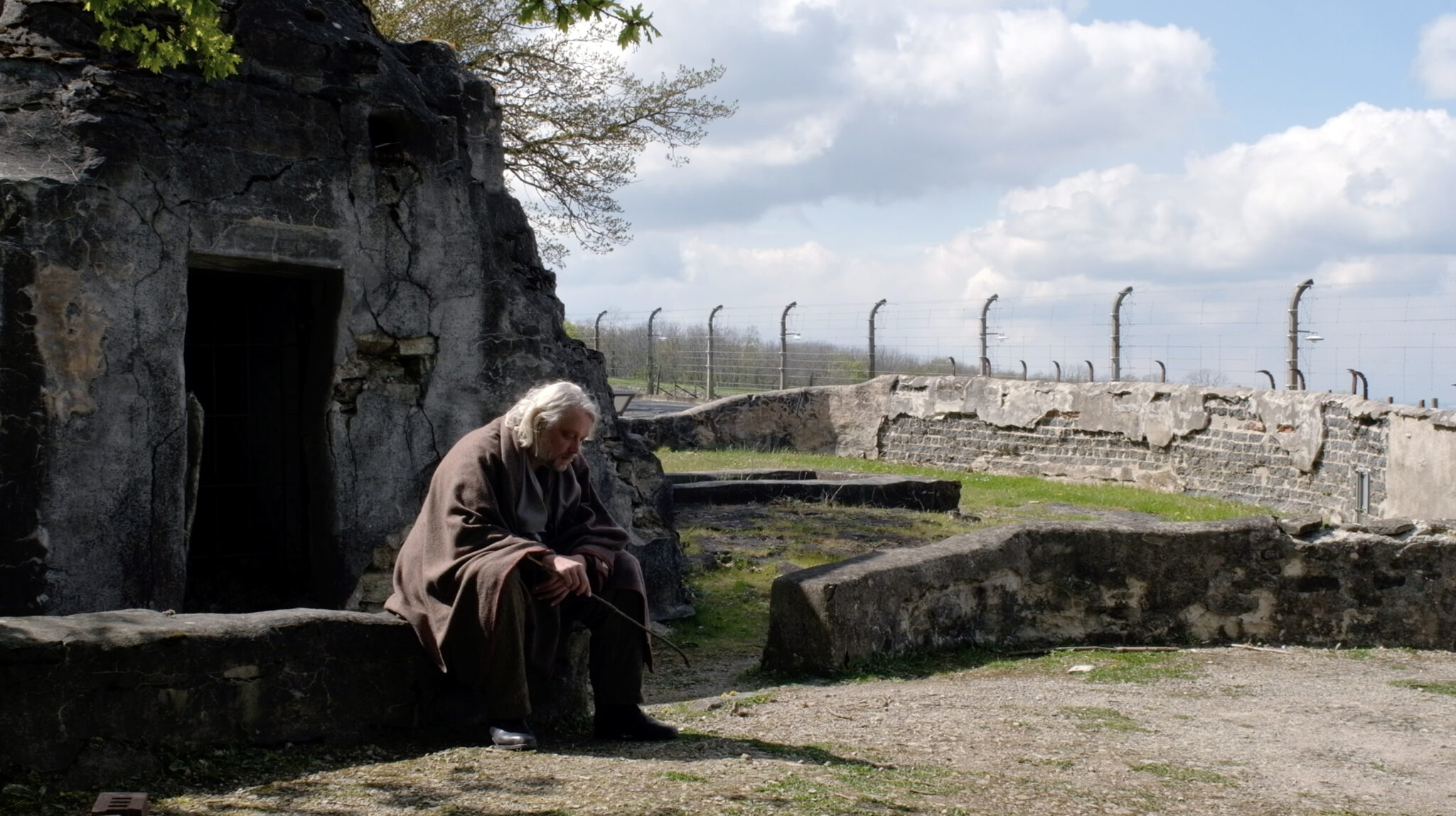
Ingo Niermann and Erik Niedling, Eigner, 2024. Video, 7:31 min 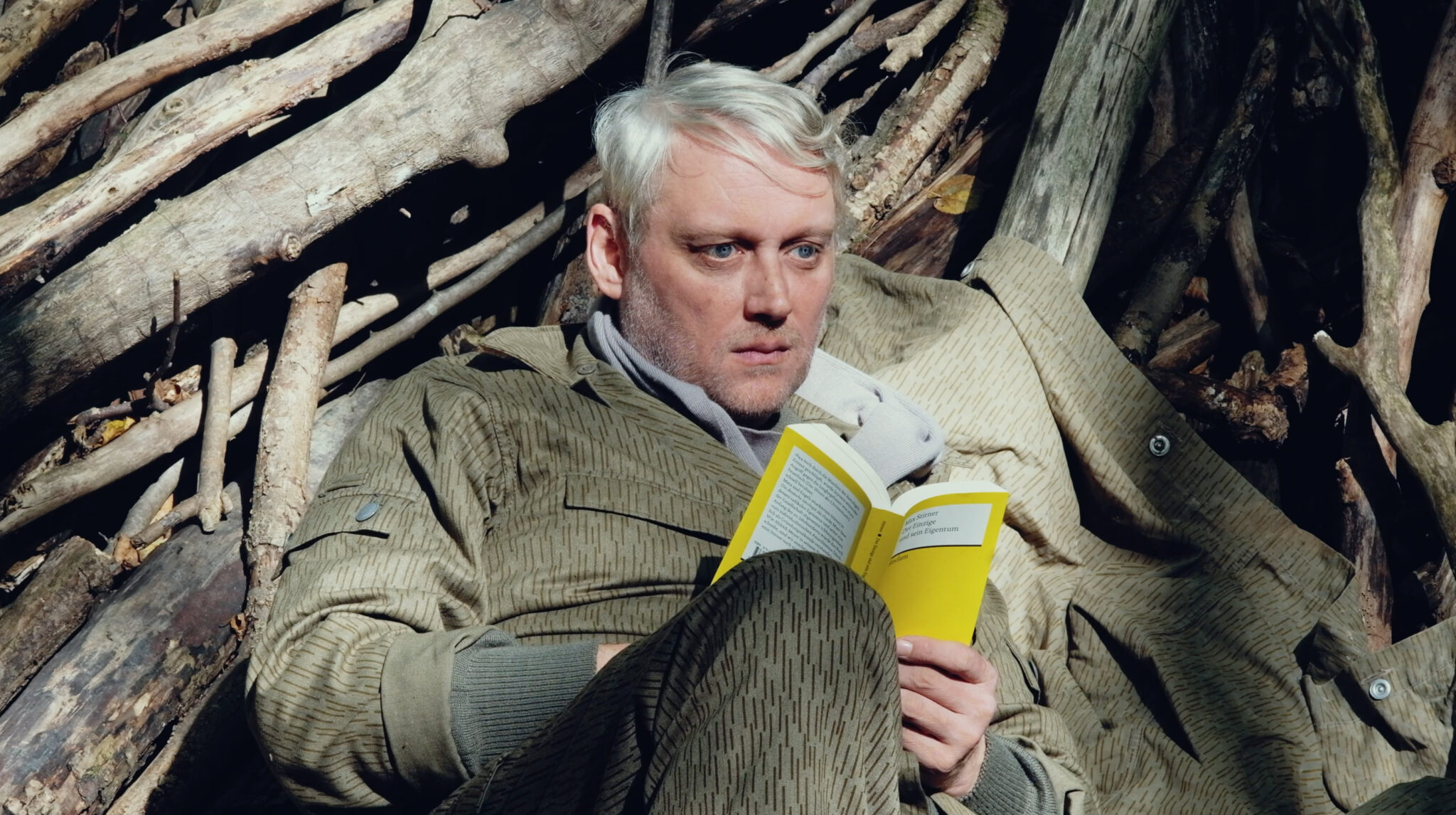
Ingo Niermann and Erik Niedling, Walder, 2023. Video, 7:31 min 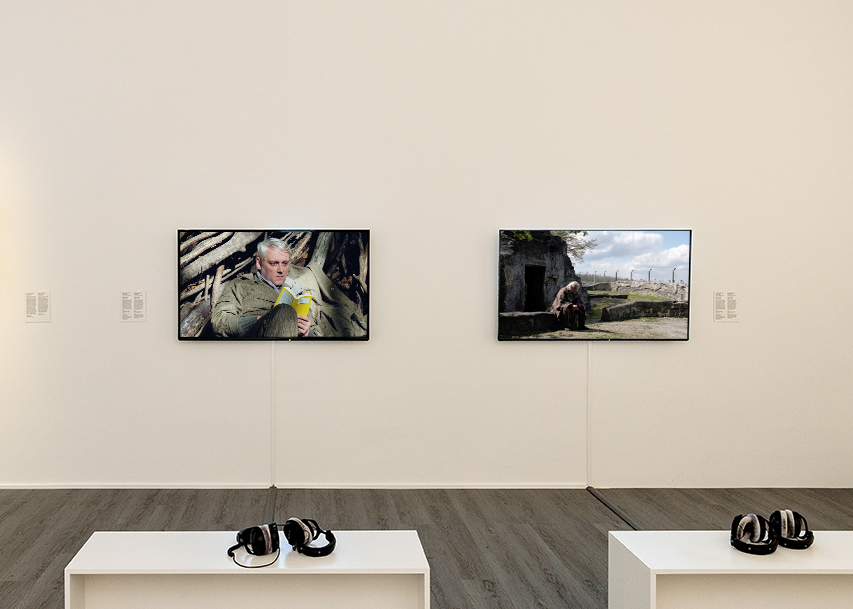
Walder and Eigner, 2024. Installation view, steirischer herbst, Graz -
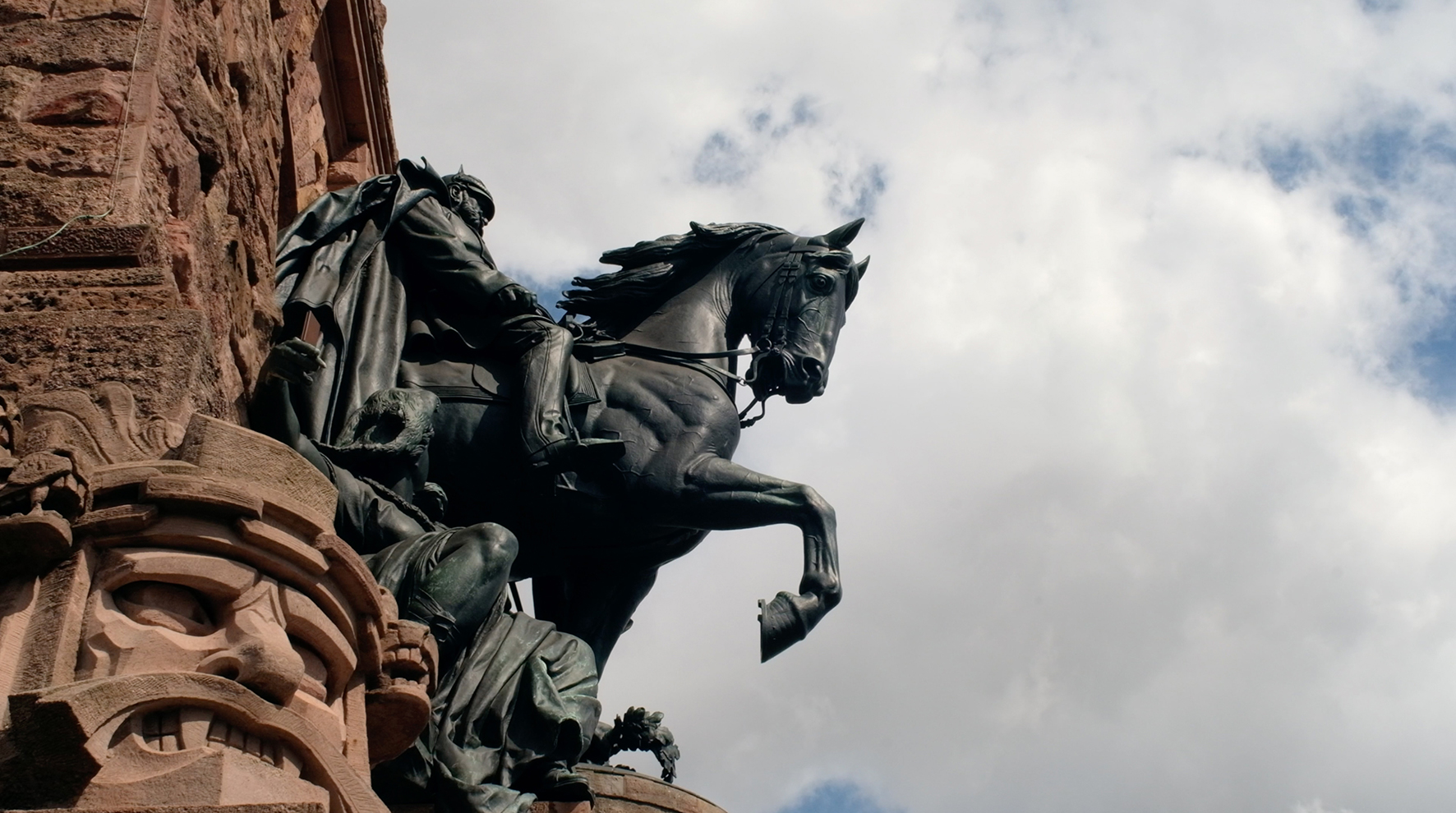
In the third exhibition of the DZT as part of the f/stop – Festival for Photography Leipzig, Erik Niedling explores the question of how Thuringia became a rallying point for rightwing radicals and neo-Nazis after the fall of the Wall, and chronicles how, in order to violently oppose them and the annexation of the socialist Eastern Germany by the capitalist Western Germany, he and his friends founded the “Anarchist Faction” as teenagers. Niedling gathers archival material and historical artifacts and presents his personal story as a fragment. The center of the exhibition is the film In the Heart of Germany, in which the artist Amy Patton reads a script (see pp. 8–14) recounting the history of divided Germany, the period of reunification, and the activities of the Anarchist Faction over a montage of tranquil images of Thuringia. A present-day encounter between Niedling and an old comrade-in-arms, who today belongs to the QAnon movement, gives a glimpse into an ominous future. A display case shows documents and artifacts from the Anarchist Faction that are directly related to the film’s narrative. A second display case relates to the history of the photographic work White Cat (2020), which is also on display and shows the cat of the right-wing publishing couple Götz Kubitschek and Ellen Kositza and found a new owner in 2021 through the “White cat to give away” campaign after a jury decision and at the same time the question was addressed: Nazis out – but where to? Furthermore, Niedling shows a Flag Painting, executed in the state colors, red and white, which are omnipresent in Thuringia, on GDR canvas found during the research.
Erik Niedling, In the Heart of Germany, 2022. Video, 22:57 min 
Dokumentationszentrum Thüringen, 2024. Installation view, f/stop Festival, Leipzig 
Dokumentationszentrum Thüringen, 2024. Installation view, f/stop Festival, Leipzig -
In Romanticism, the forest serves as a timeless refuge from the modern world. The group exhibition Walder assumes that the forest is no longer an antipode, but the dominant reality. Ingo Niermann and Erik Niedling’s video of the same title shows a lonely middle-aged man strolling through the Thuringian woods, imagining himself as the law, the power and the people. This work is complemented by paintings, drawings, photographs and artefacts, also by Fabian Reetz, Genesis P. Orridge, Kazuko Miyamoto, Kinga Kiełczyńska and Thomas Bayrle, in which the word for world is again forest.

Walder, 2023, Installation view, EXILE at DZT, Erfurt 
Thomas Bayrle, A Gift to Erik, 2010, iron, wood, 22 × 20.5 × 4.5 cm 
Walder, 2023, Installation view, EXILE at DZT, Erfurt 
Kazuko Miyamoto, Woman in Snow, 1998, archival inkjet print from original slide, 25 × 38 cm, printed 2009 
Erik Niedling, Untitled (Chamber), 2023, oil on canvas, 60 × 50 cm 
Genesis Breyer P-Orridge, A Gift to Ingo, 2010, horn, chain, nail, 15 × 40 × 8.5 cm 
Ingo Niermann, Cause For A Greater Love Than Ever Before, 2022, paper, rubber band, 29.7 × 9.5 × 4 cm 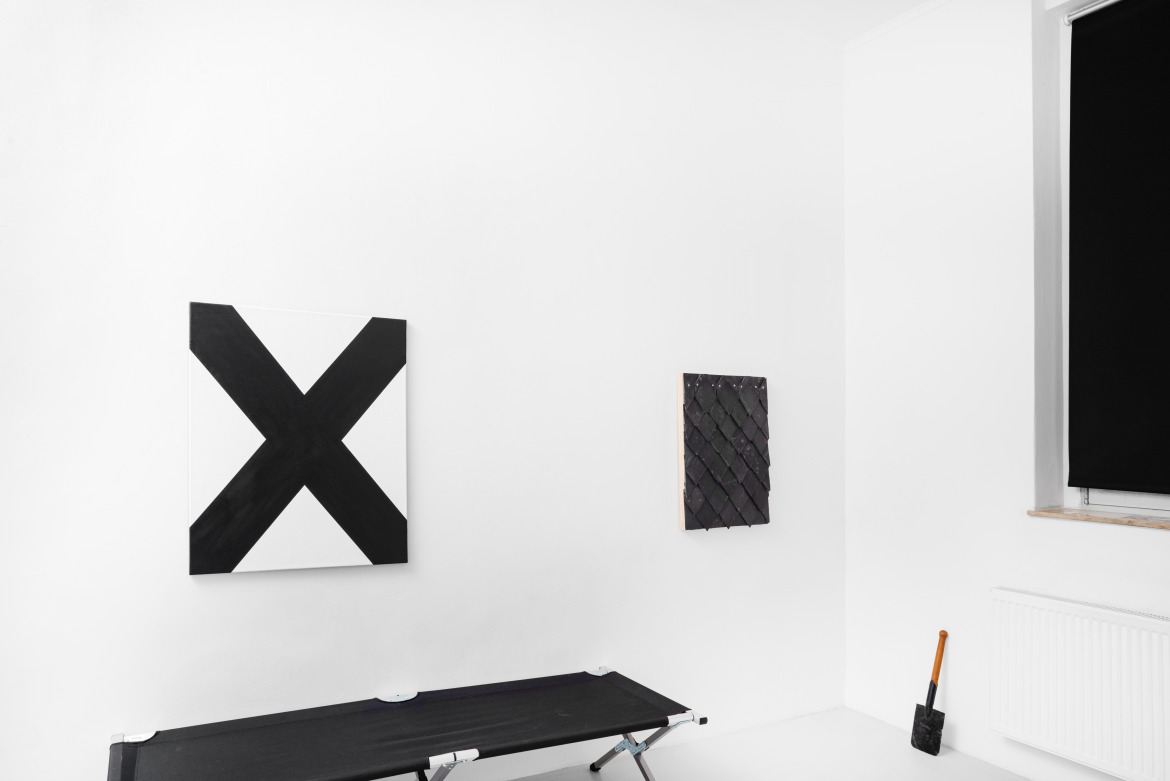
Walder, 2023, Installation view, EXILE at DZT, Erfurt 
Erik Niedling, Flag Painting II (Deutsch Süd-Ost), 2022, oil on canvas, 90 × 75 cm 
Fabian Reetz, East German Gothic Study 2, 2023, slate, wood, nails, 70 × 50 cm 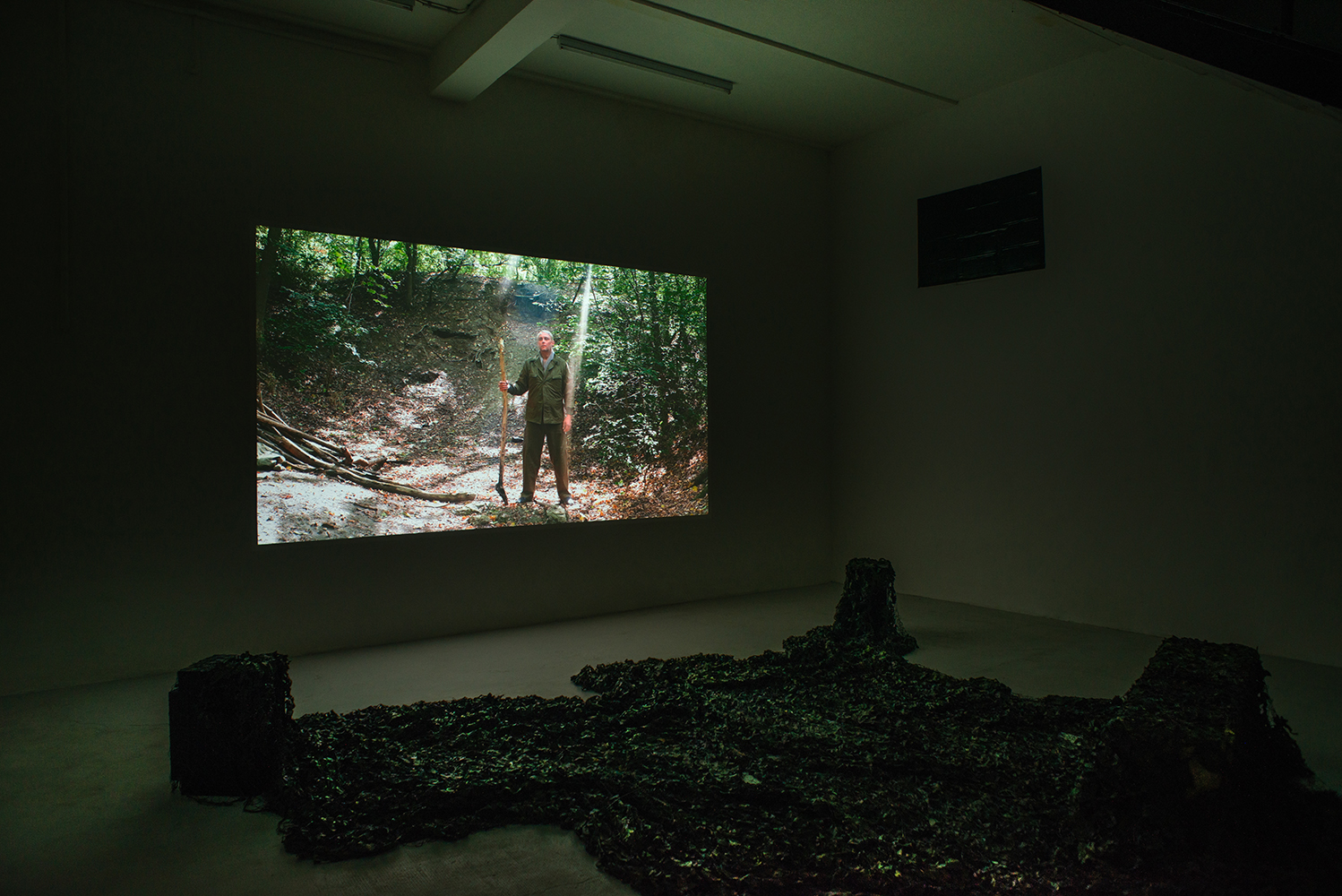
Walder, 2023, Installation view, EXILE at DZT, Erfurt 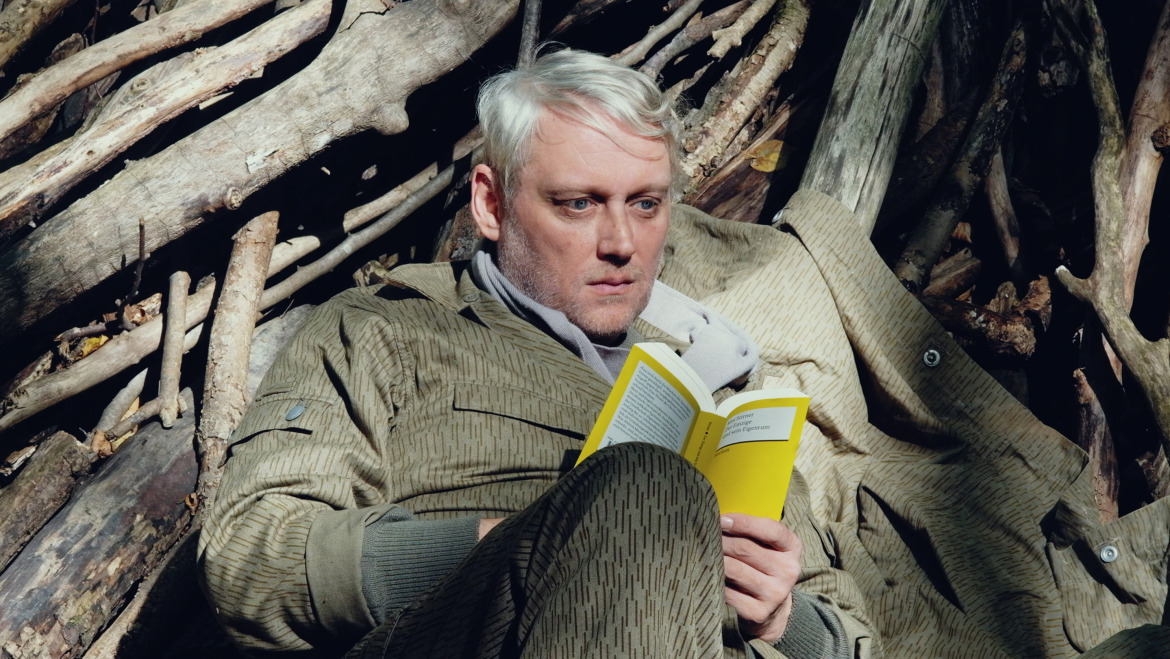
Ingo Niermann and Erik Niedling, Walder, 2023, video, 7:25 min -
In the DZT’s exhibition Summer of Anarchy (2022) – Erik Niedling explores the question of how Thuringia became a rallying point for right-wing radicals and neo-Nazis after the fall of the Wall, and chronicles how, in order to violently oppose them and the annexation of the socialist Eastern Germany by the capitalist Western Germany, he and his friends founded the „Anarchist Faction“ as teenagers. Niedling gathers archival material and historical artifacts and presents his personal story as a fragment in world events. A present-day encounter between Niedling and an old comrade-in-arms, who today belongs to the QAnon movement, gives a glimpse into an ominous future. The DZT sees itself as a complement to the Burial of the White Man, which Niedling and Niermann anticipate annually on May 8, the day of Germany’s defeat in World War II, on Thuringia’s Kleiner Gleichberg. Here, the largest pyramid in the world is one day to be cut out of the mountain and subsequently disappear under it again, symbolically burying the archetype of the White Man, which bears a particular responsibility for oppression and violence.
Summer of Anarchy, 2022. Installation view, DZT, Erfurt 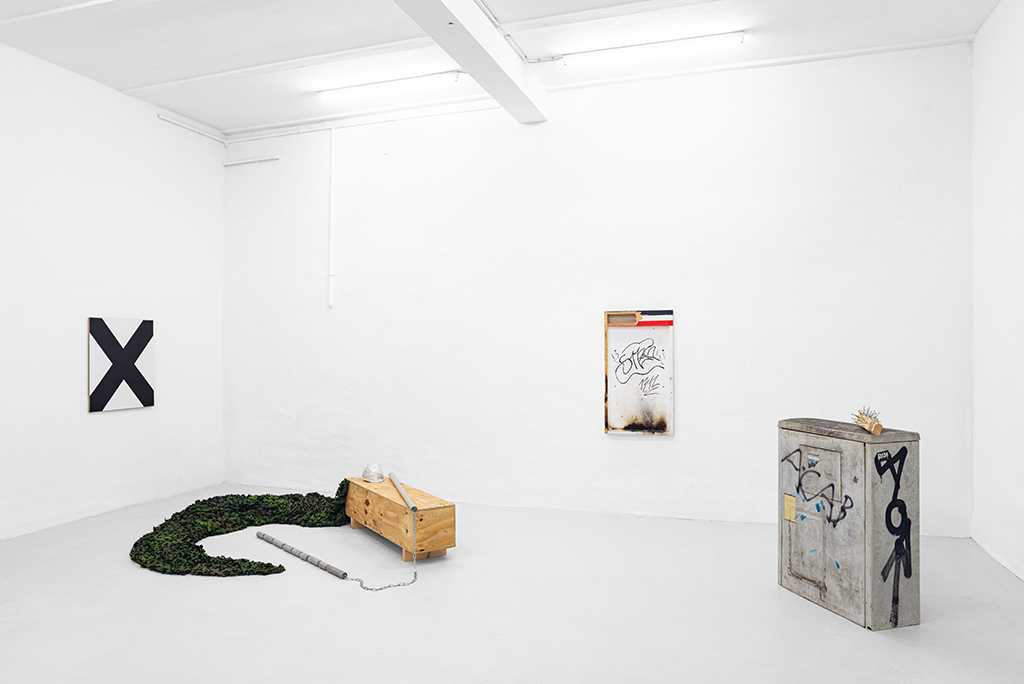
Summer of Anarchy, 2022. Installation view, DZT, Erfurt 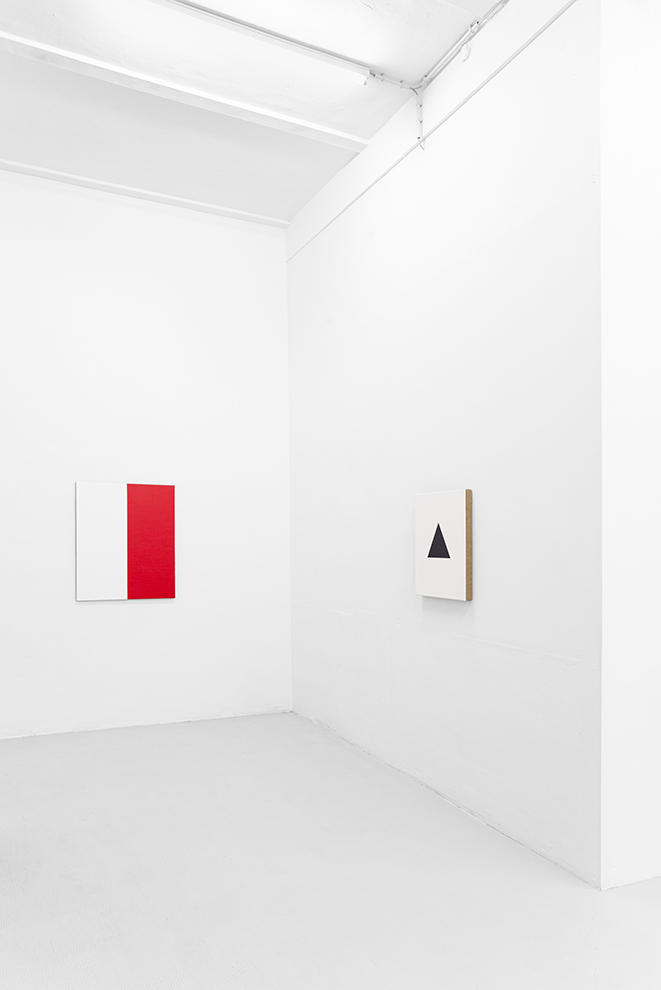
Summer of Anarchy, 2022. Installation view, DZT, Erfurt 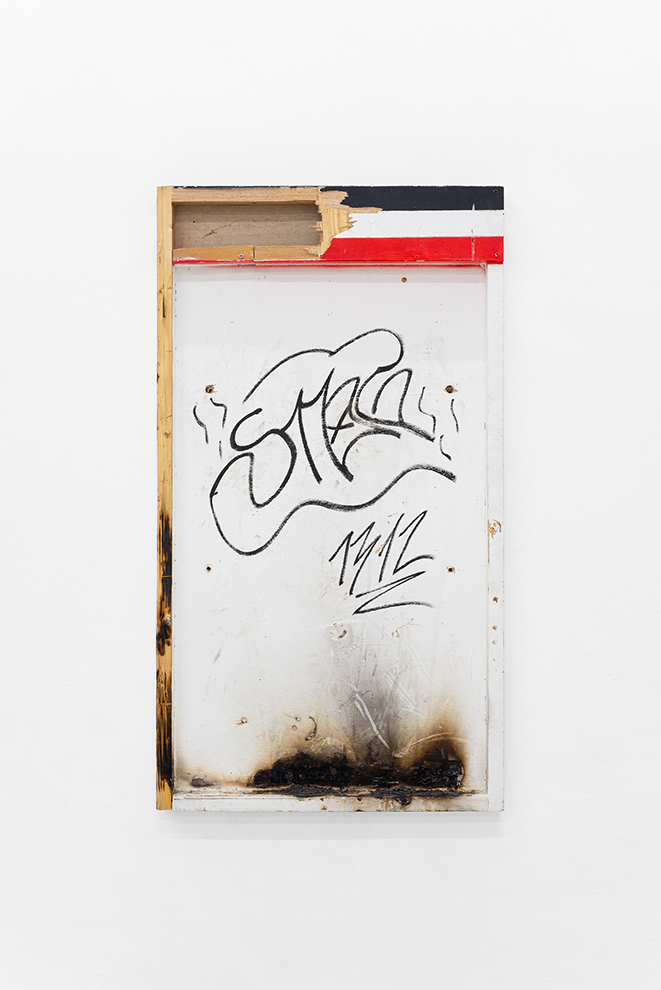
Erik Niedling, Information Board, 2021, wood, paint, wax, soot, steel, thumbtack, 117 × 65 × 6 cm 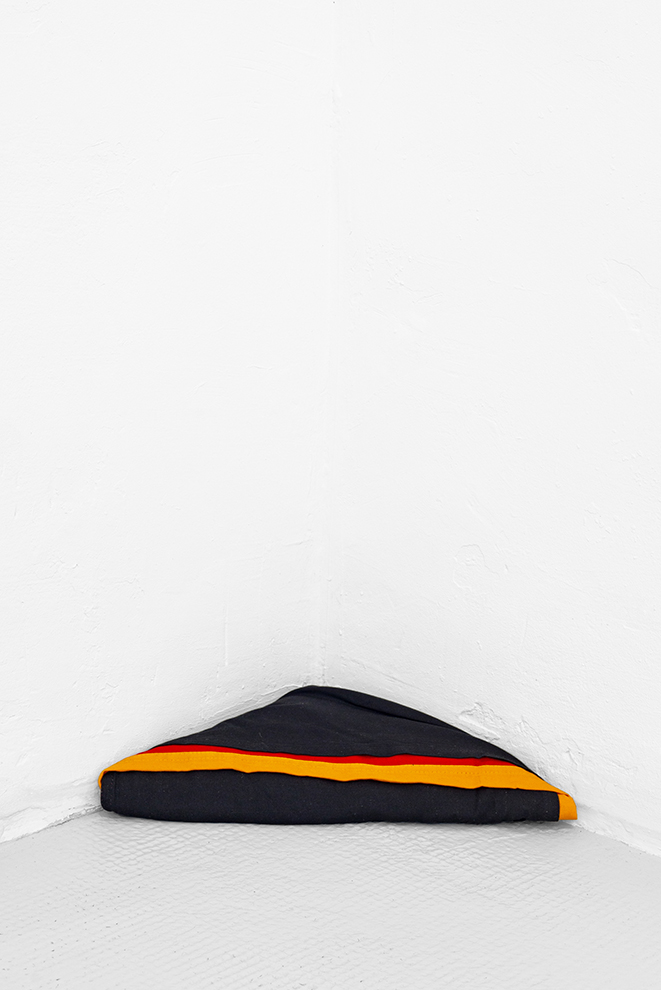
Erik Niedling, Folded Flag I (GDR), 2022, fabric, 6 × 59 × 28 cm -
In the DZT’s first exhibition – Dokumentationszentrum Thüringen – Erik Niedling explores the question of how Thuringia became a rallying point for right-wing radicals and neo-Nazis after the fall of the Wall, and chronicles how, in order to violently oppose them and the annexation of the socialist Eastern Germany by the capitalist Western Germany, he and his friends founded the “Anarchist Faction” as teenagers. Niedling gathers archival material and historical artifacts and presents his personal story as a fragment in world events. At the center of the exhibition is the film In the Heart of Germany, in which the artist Amy Patton reads a script recounting the history of divided Germany, the period of reunification, and the activities of the Anarchist Faction over a montage of tranquil images of Thuringia. A present-day encounter between Niedling and an old comrade-in-arms, who today belongs to the QAnon movement, gives a glimpse into an ominous future. Two display cases contain Anarchist Faction documents, press photographs, and artifacts directly related to the film’s narrative. On the walls are four photographic stills taken during the making of the film. Furthermore, Niedling shows two Flag Paintings, executed in the state colors, red and white, which are omnipresent in Thuringia, on GDR-era canvases found during the artist’s research, and a painting from the Burial of the White Man series which shows a black triangle on a white ground. Also on view are two artifacts that came into his possession during excavations on historical grounds. The first is Information Board, a decommissioned noticeboard from the radical right-wing Thuringian party Der III. Weg (founded 2013), the second is Target, a fragment of a steel girder riddled with bullet holes that Niedling excavated on a former firing range in Erfurt’s Steigerwald, which was used by neo-Nazis as a training ground after the fall of the Wall.
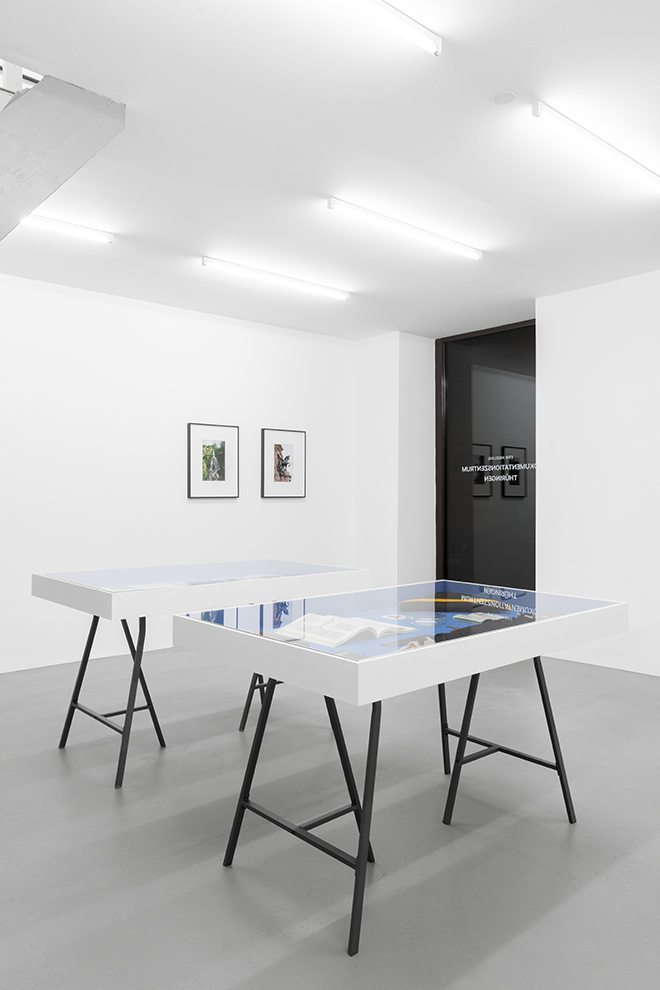
Erik Niedling, Dokumentationszentrum Thüringen, 2022, Installation view, EXILE 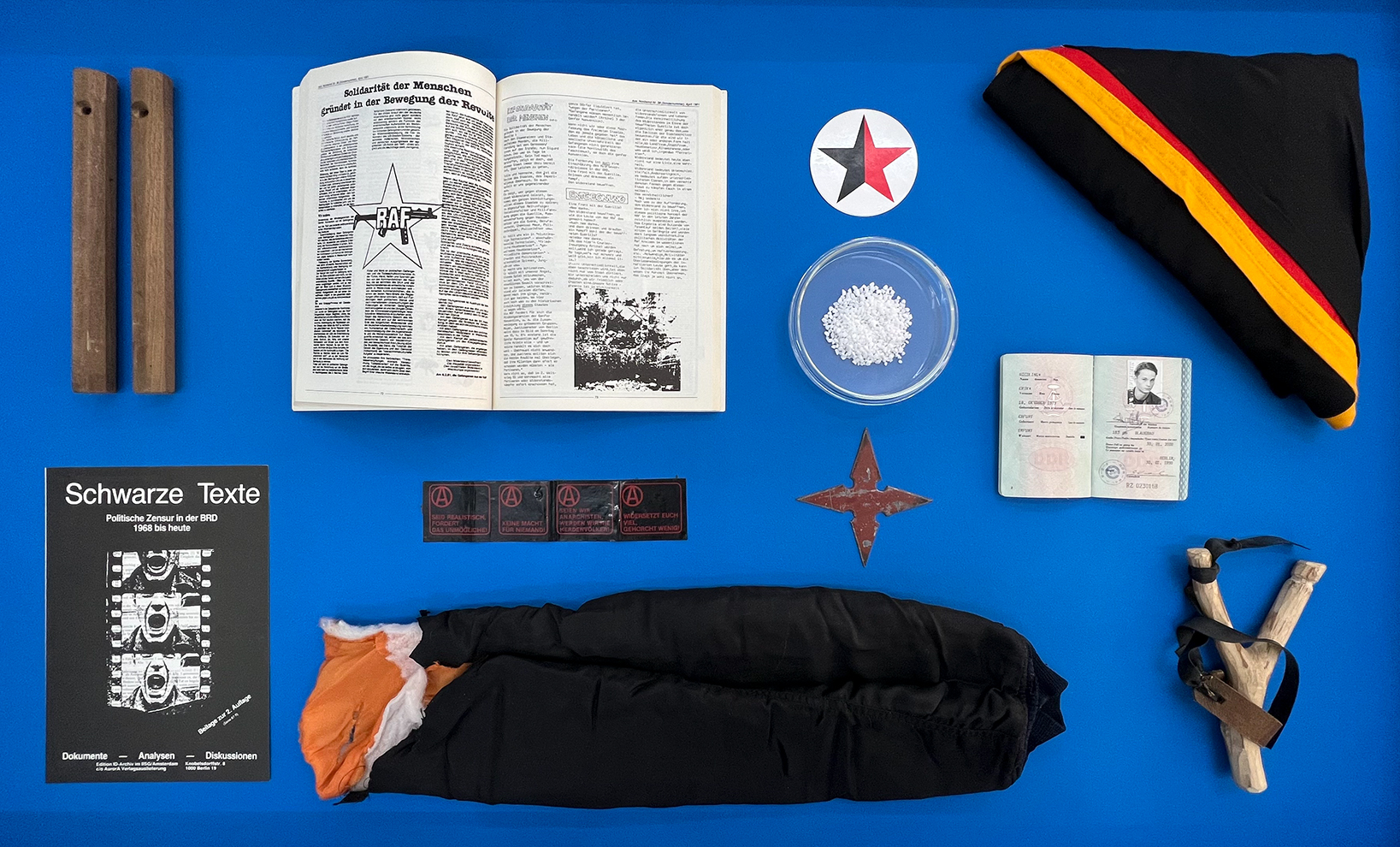
Erik Niedling, Display case I, 2022, 80 × 140 × 15 cm 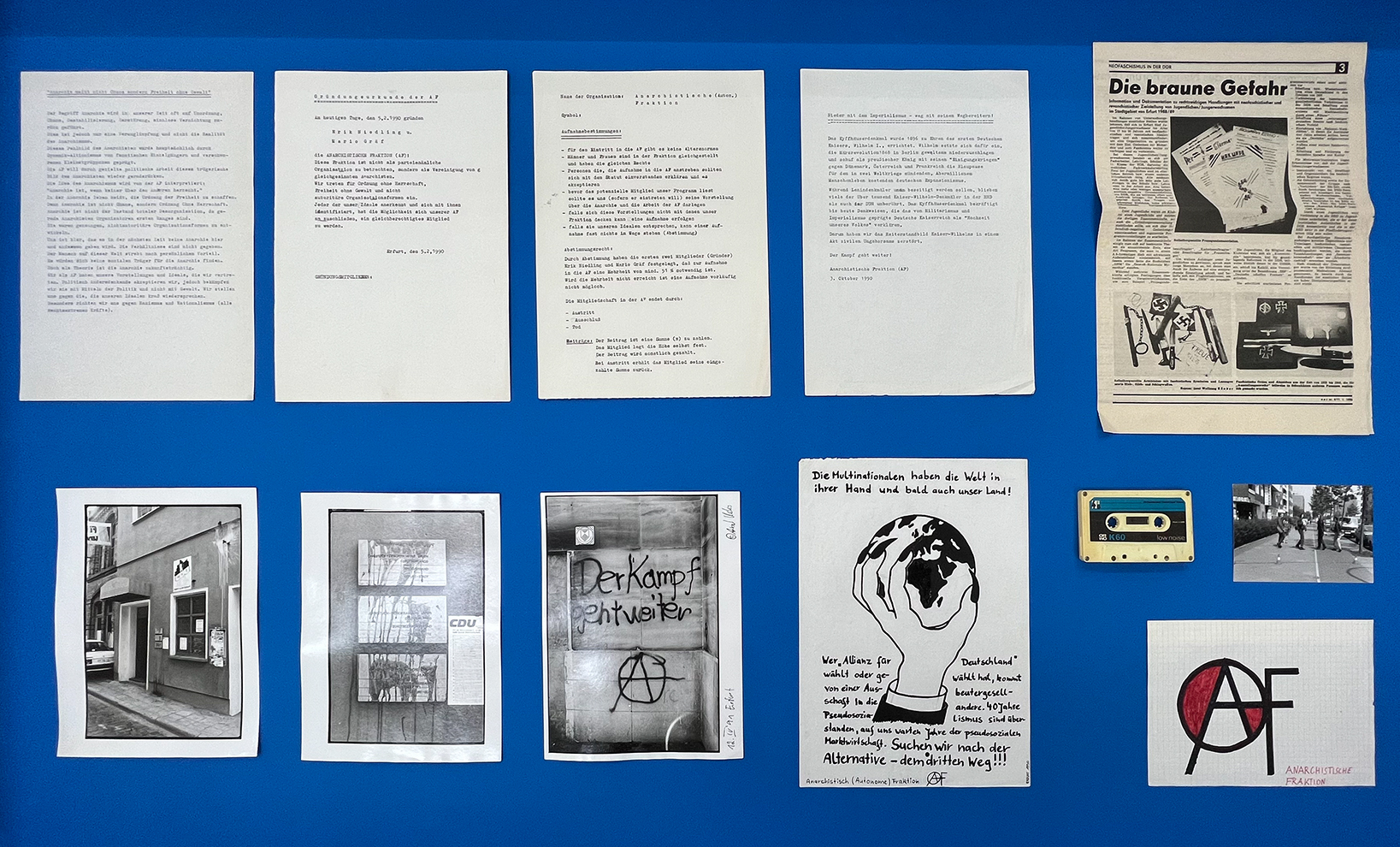
Erik Niedling, Display case II, 2022, 80 × 140 × 15 cm 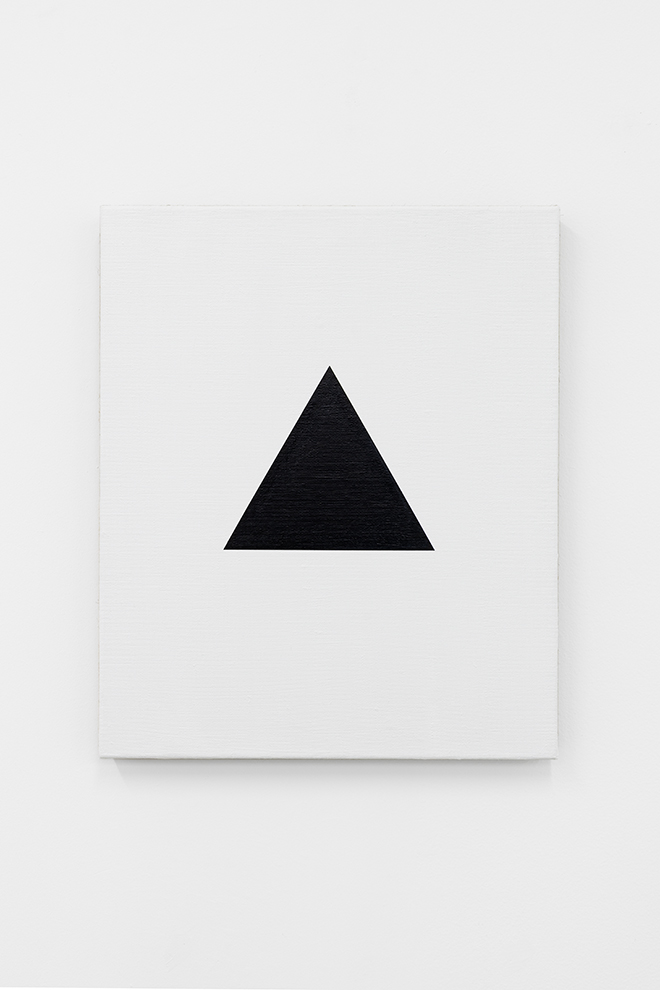
Erik Niedling, Untitled III (Burial of the White Man), 2021, oil on canvas, 60 × 50 cm 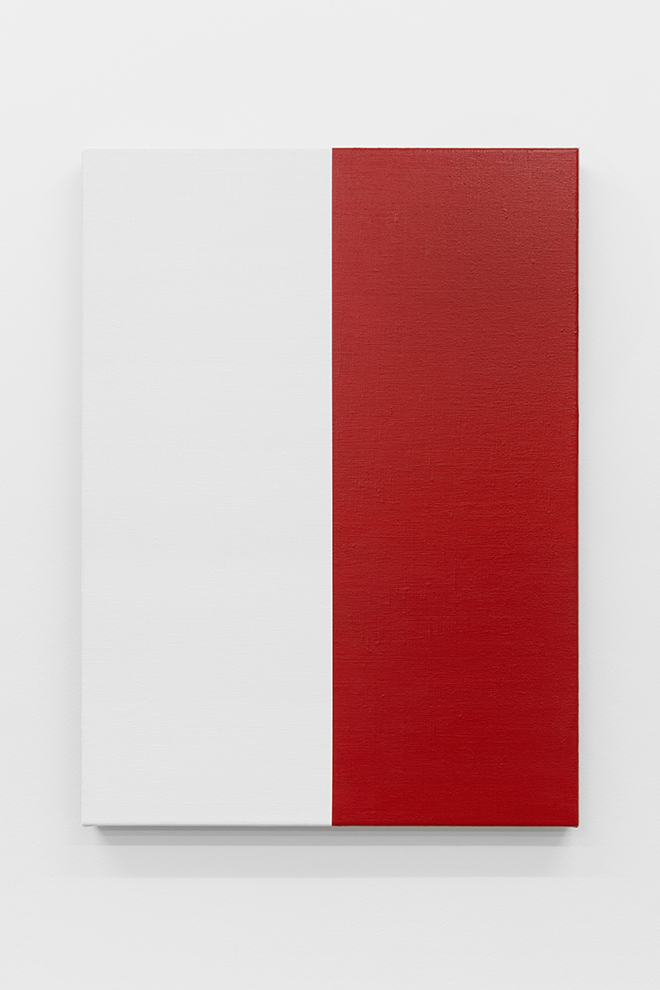
Erik Niedling, Flag Painting (Thuringia), 2022, oil on canvas, 80 × 60 cm 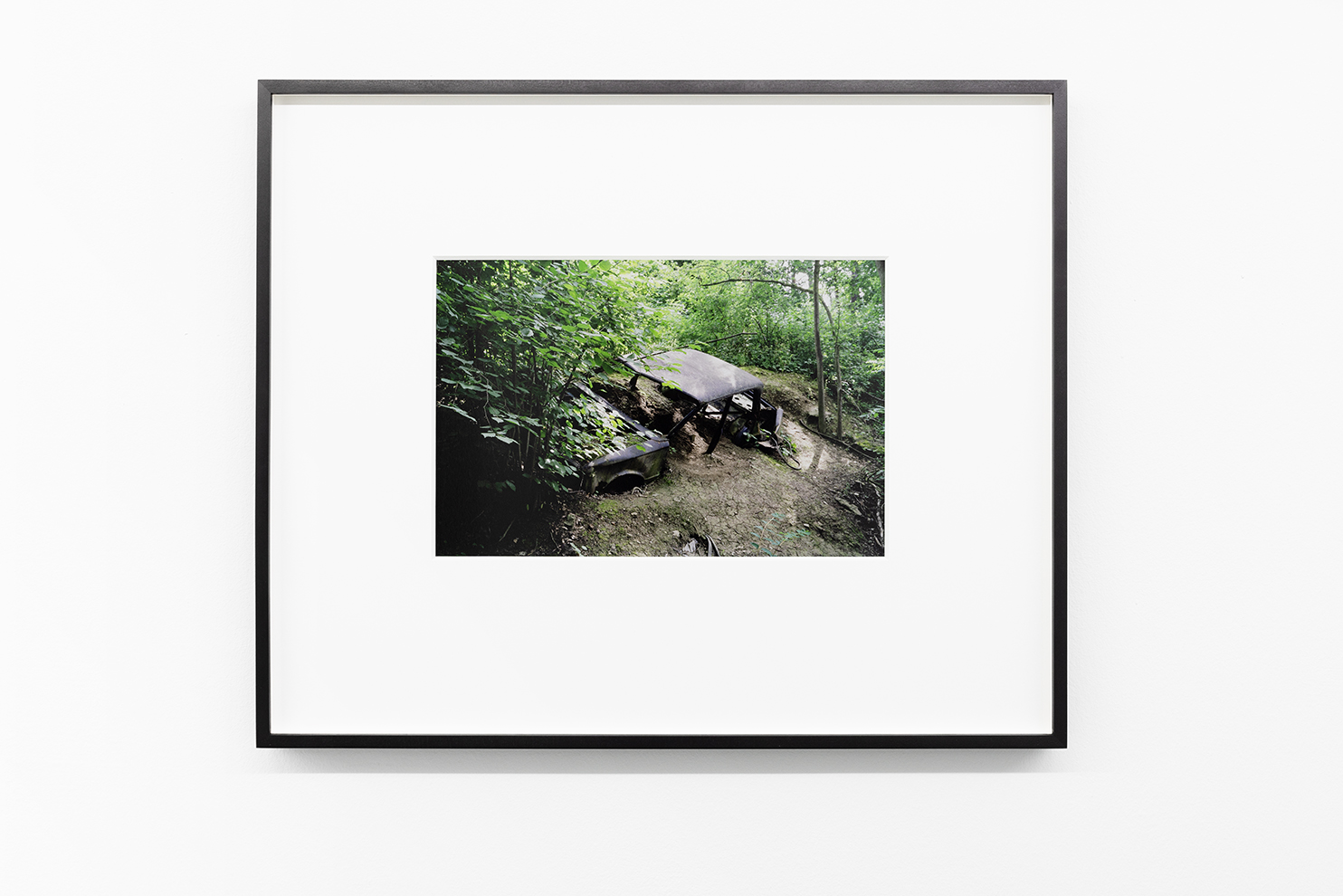
Erik Niedling, Thuringian Photograph (Car), 2022, archival inkjet print, 46 × 58 cm 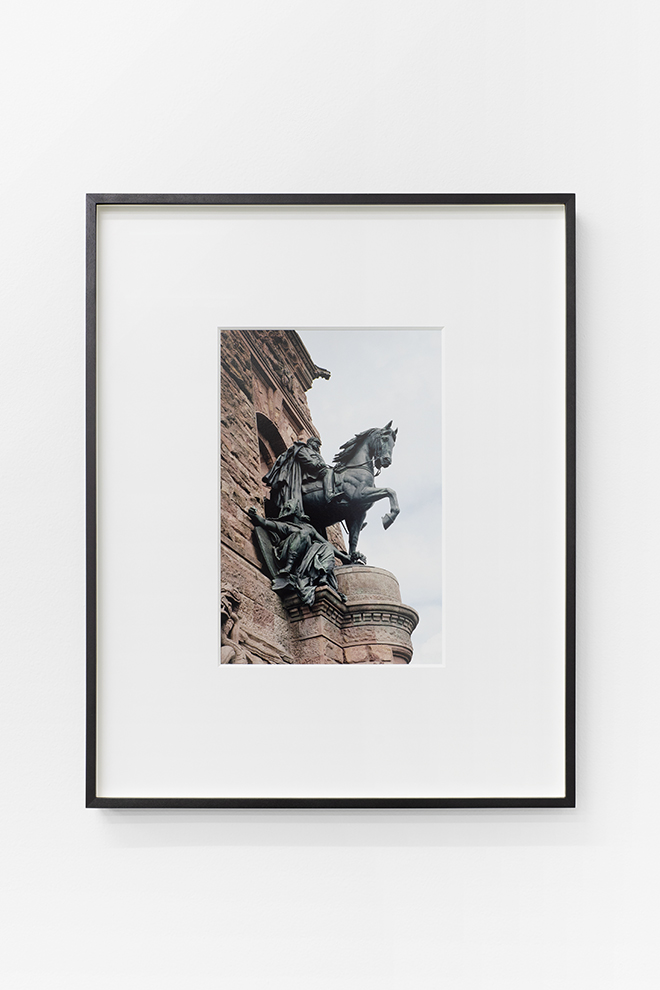
Erik Niedling, Thuringian Photograph (Equestrian statue), 2022, archival inkjet print, 58 × 46 cm 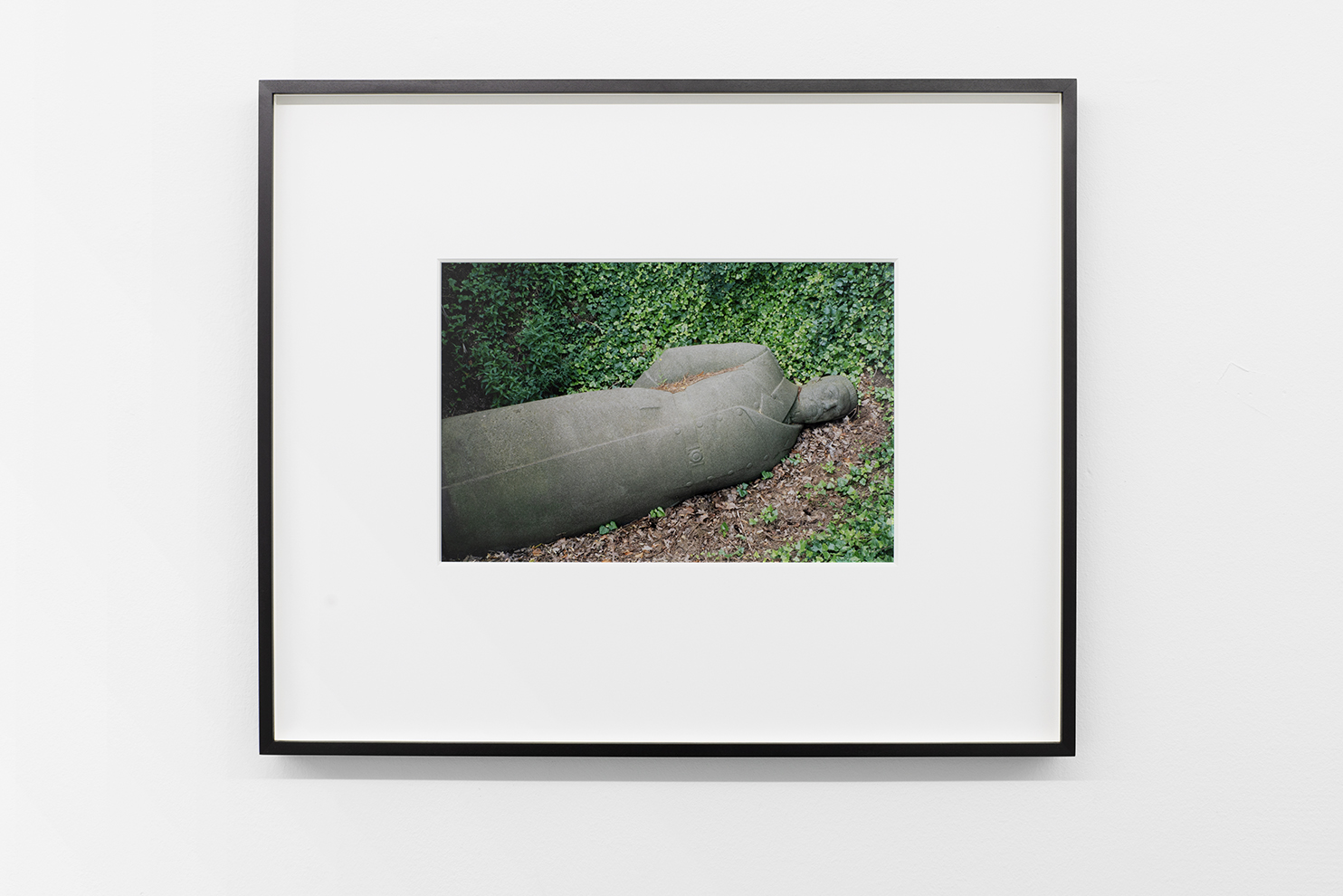
Erik Niedling, Thuringian Photograph (Statue), 2022, archival inkjet print, 46 × 58 cm 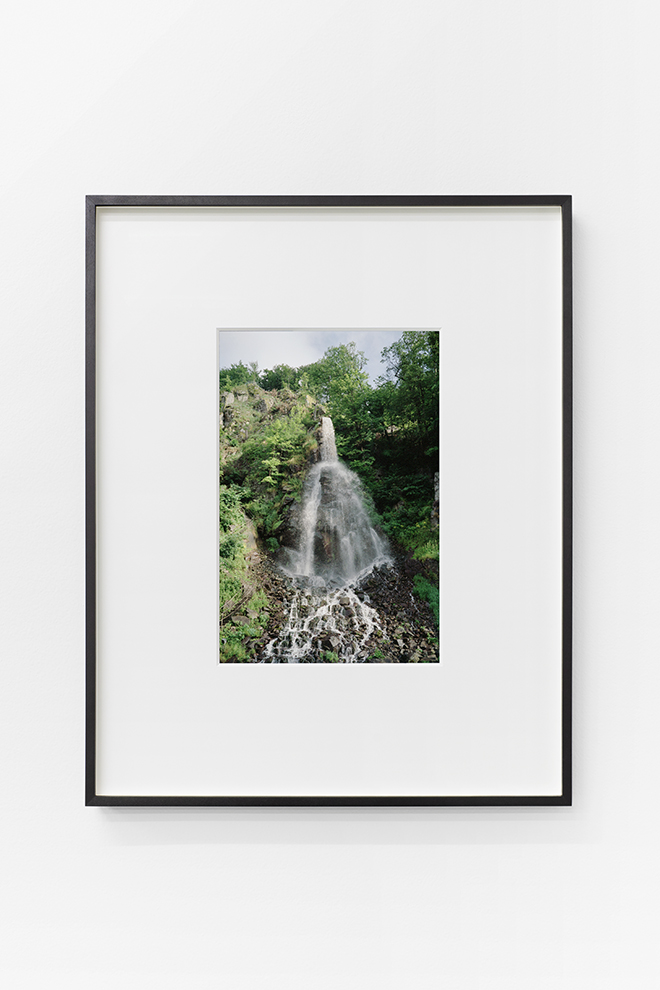
Erik Niedling, Thuringian Photograph (Waterfall), 2022, archival inkjet print, 58 × 46 cm 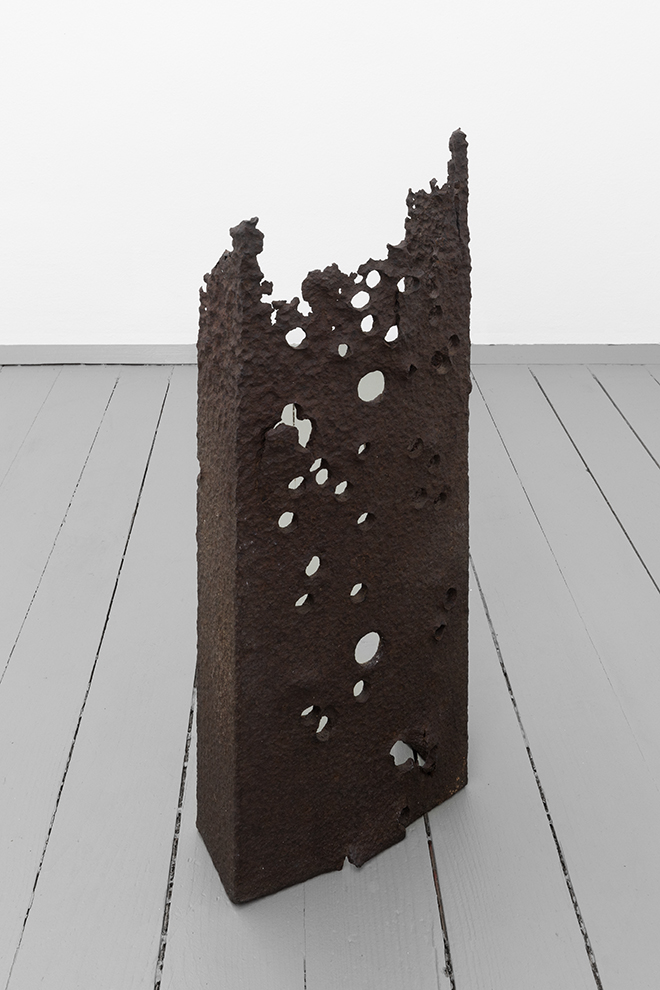
Erik Niedling, Target, 2021, steel, gun oil, 53 × 19.5 × 7 cm 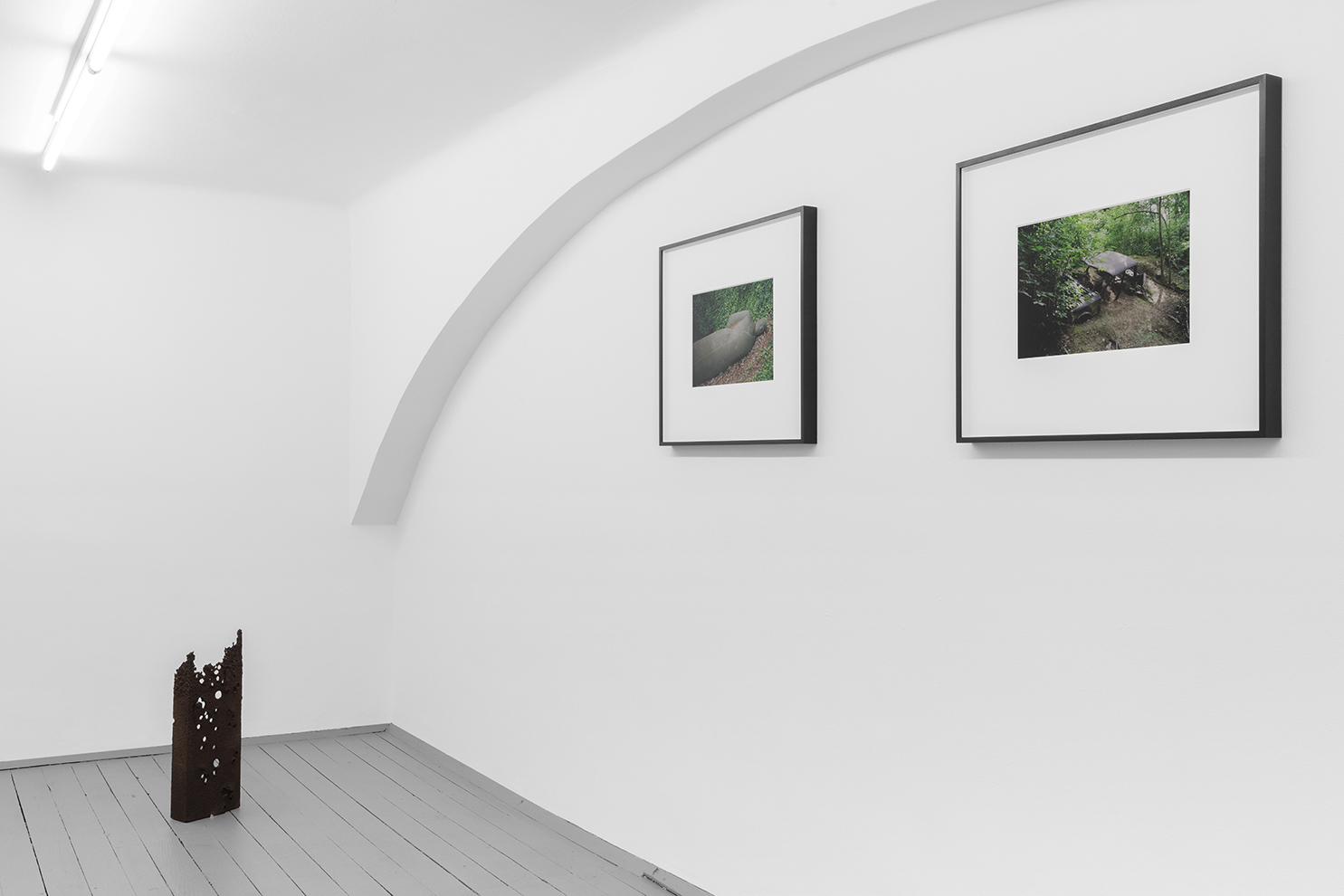
Erik Niedling, Dokumentationszentrum Thüringen, 2022, Installation view, EXILE 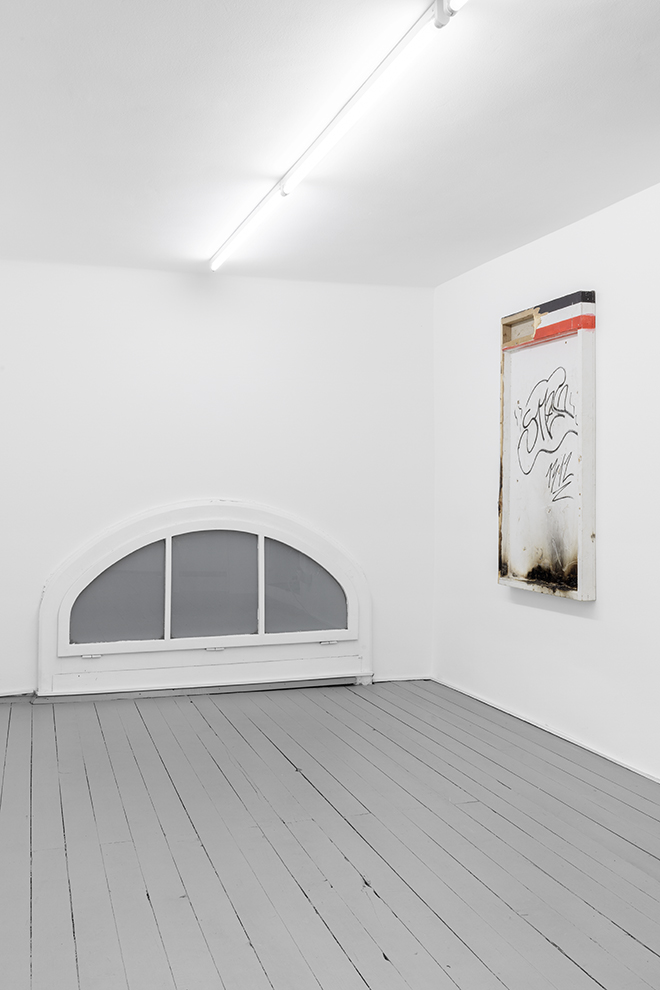
Erik Niedling, Dokumentationszentrum Thüringen, 2022, Installation view, EXILE 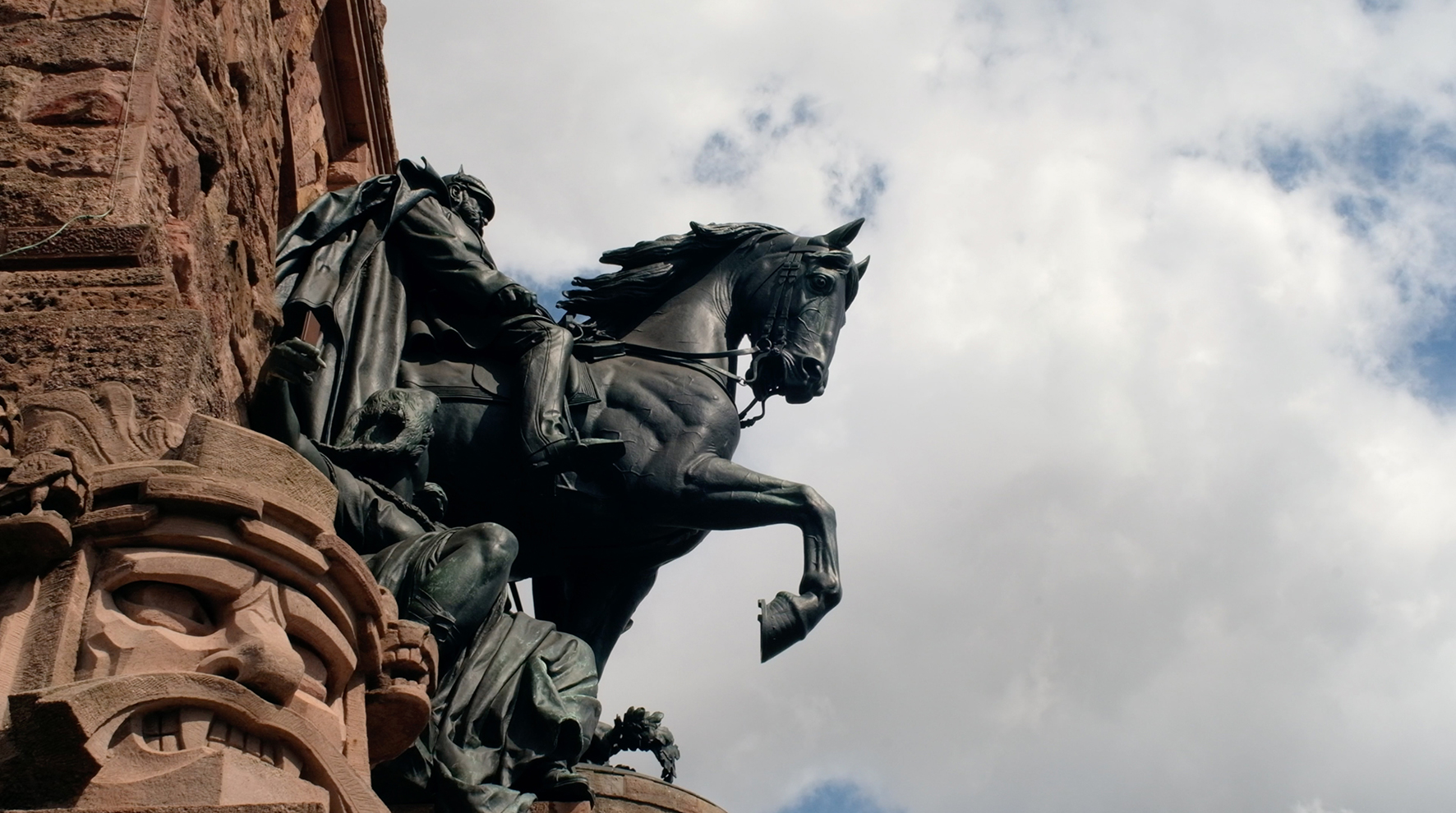
Erik Niedling, In the Heart of Germany (still), 2022, video, 22:57 min 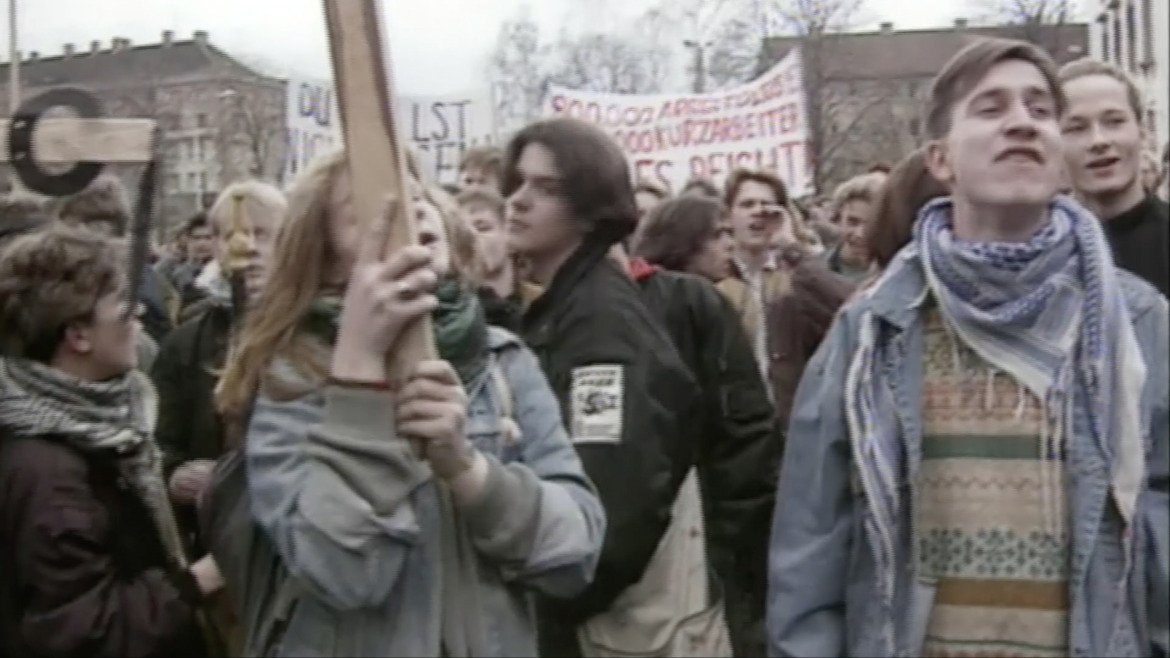
Erik Niedling, Helmut Kohl in Erfurt (still), 2022, video, 10:46 min -
White men are on the brink of extinction, and they don’t seem to be having such a bad time. After retreating to a “bastion” in the German Southeast they let their imaginations run wild. Such is the premise of Ingo Niermann’s novel Deutsch Süd-Ost, presented here in 25 episodes by acclaimed actress Mavie Hörbiger. Niermann’s text is a who-is-who of prominent “last white men”: representatives of the New Right, Reichsbürger, controversial artists, and intellectuals. Inspired by their new sociotope, they develop revolting trends in music, fashion, sex, food, and terrorism, they build “Nazizoos”, attempt to breed an Aryan-Slavic master race and a species above and beyond both man and beast. Deutsch Süd-Ost is a tragicomic mental laboratory in which Niermann’s own role as a white man and radicalizations among his own acquaintances are subject to playful experimentation. Right-wing ideology is not consigned to the trash can, but rather processed and prophetically transformed.
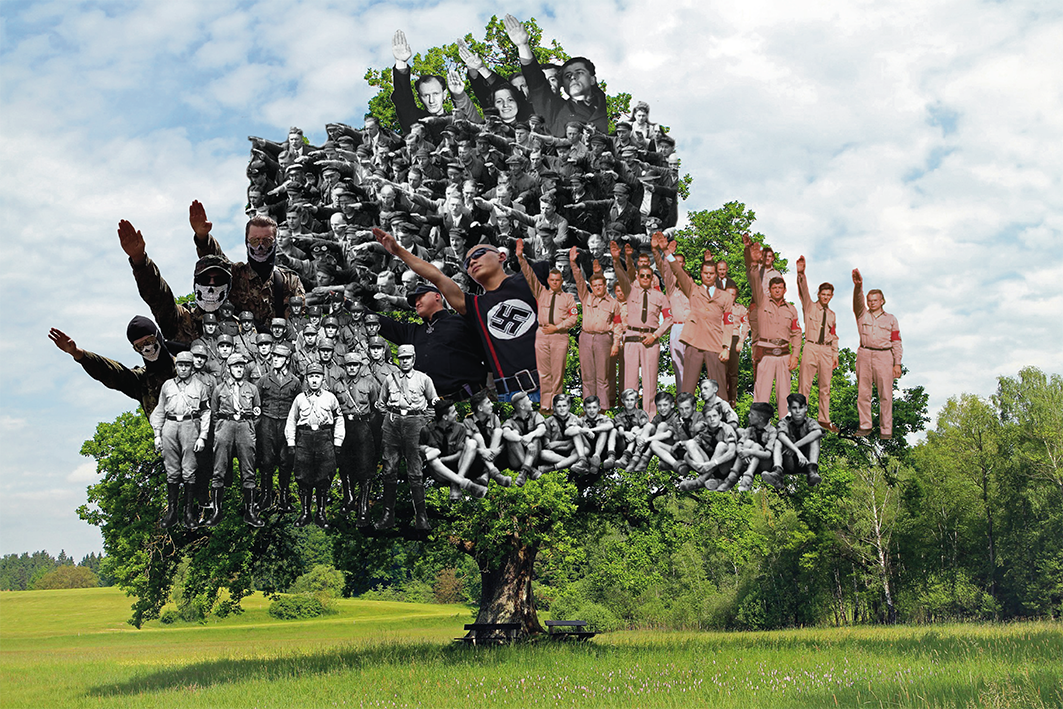
Nazibaum, from: Ingo Niermann, Deutsch Süd-Ost, 2020. Collage: Mad Smell. 
Schizonazi, from: Ingo Niermann, Deutsch Süd-Ost, 2020. Illustration: Boah Kim. 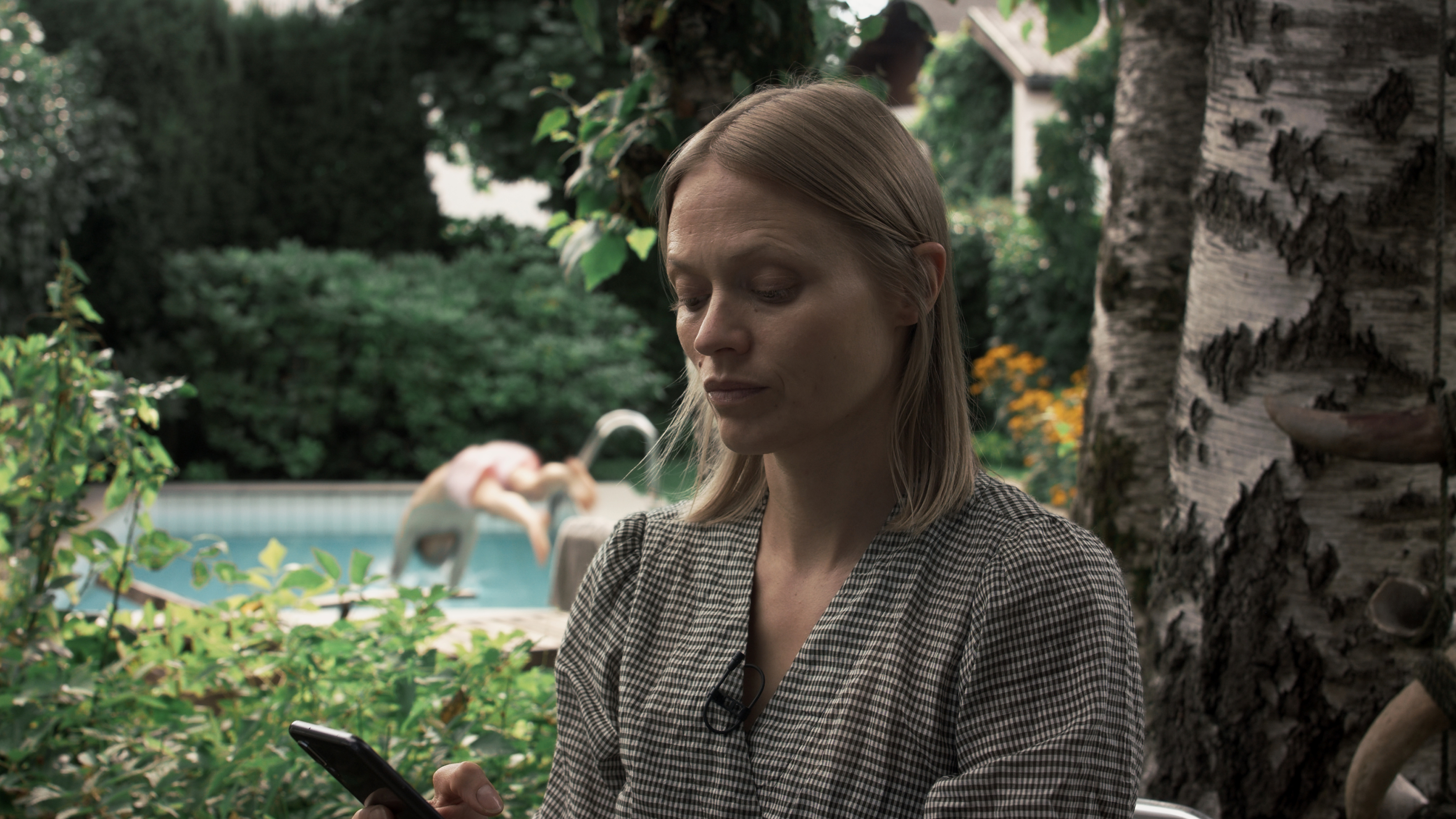
Mavie Hörbiger in: Ingo Niermann, Deutsch Süd-Ost, 2020.
- Fabian Reetz, East German Gothic Study (Source Material)
- Erik Niedling, 100 White Men
- Ingo Niermann & Erik Niedling, Eigner
- Ingo Niermann & Erik Niedling, Walder
- Erik Niedling, Helmut Kohl in Erfurt
- Erik Niedling, In the Heart of Germany
- Ingo Niermann, Deutsch Süd-Ost
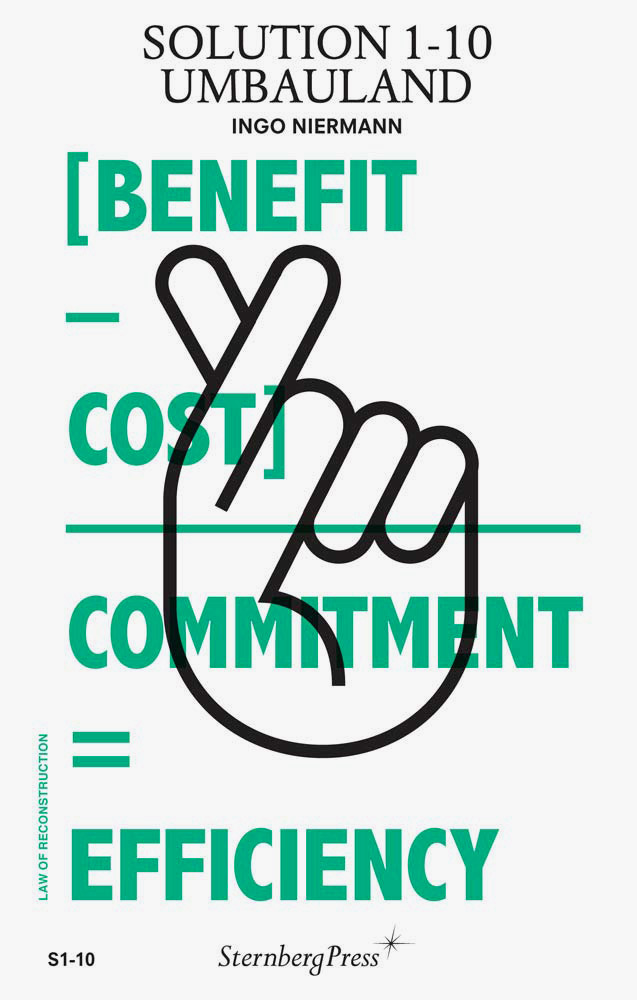
- Erik Niedling & Maik Bluhm, Burial of the White Man
- Erik Niedling & Ingo Niermann, The Future of Art
The Documentation Center Thuringia (DZT) is dedicated to researching radical political movements in Thuringia that glorify oppression and violence. Founded in 2021 by artist Erik Niedling and writer Ingo Niermann, the DZT examines both what was and what is, as well as what could be. Unlike documentation centers dedicated to Nazi history, the DZT does not confine itself to surveying particularly catastrophic past events, but understands the pursuit of oppression and violence, as manifested in National Socialism and its underlying racism, sexism, ableism, and totalitarianism, as something always undergoing transformation. In order to resist it successfully, the DZT strives to apprehend not only its existing forms but also its potential future mutations.
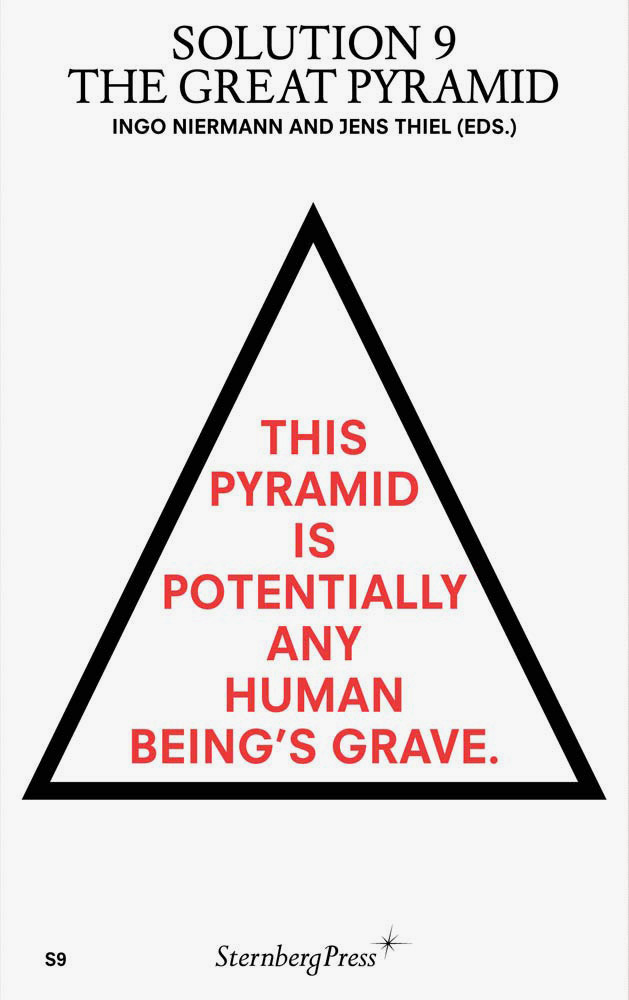
The Thuringia Documentation Center sees itself as a complement to the Burial of the White Man, which Niedling and Niermann anticipate annually on May 8, the day of Germany's defeat in World War II, on Thuringia's Kleiner Gleichberg. Here, the largest pyramid in the world is one day to be cut out of the mountain and subsequently disappear under it again, symbolically burying the archetype of the White Man, which bears a particular responsibility for oppression and violence.
Since 2026, artists Fabian Reetz and Juro Carl Anton Reinhardt are in charge of the DZT's event and exhibition program.
Kartausengarten 6
99084 Erfurt Germany
Mail: Info@dokumentationszentrumthueringen.de Instagram: @dztdokumentationszentrum By appointment during exhibitions only